Scratchbuilding a vignette with a medieval inn
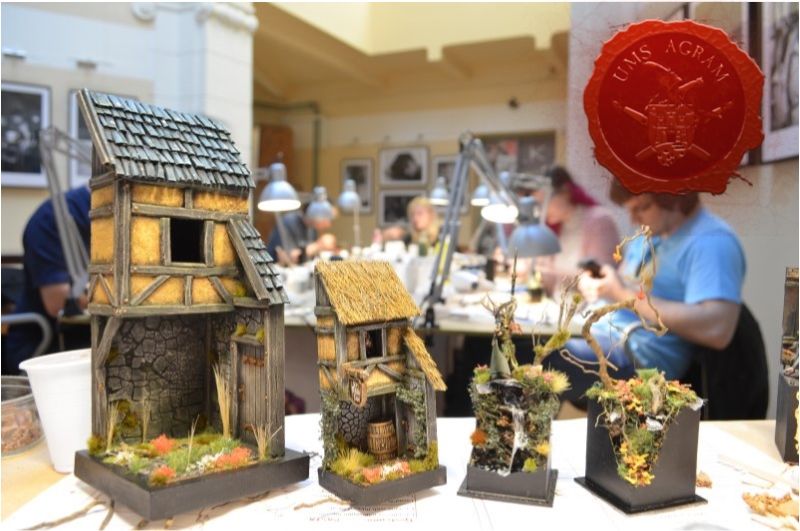
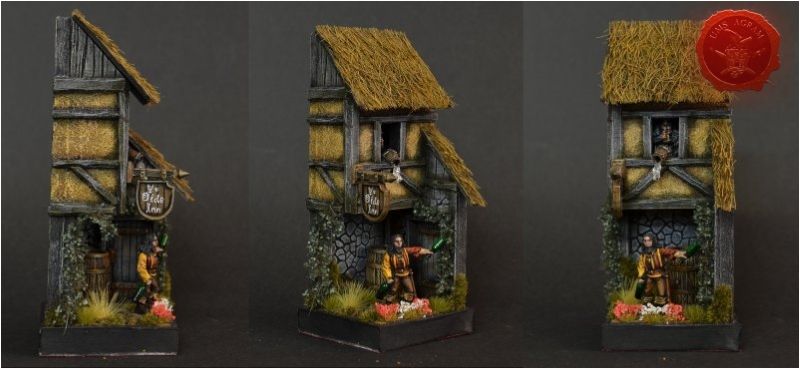
In May 2017, UMS Agram held a Diorama Building Workshop. The topic was how to scratchbuild a vignette with a medieval building on it. The tutor was Marko Paunović and this article follows the steps done during the workshop.
BALSA WOOD
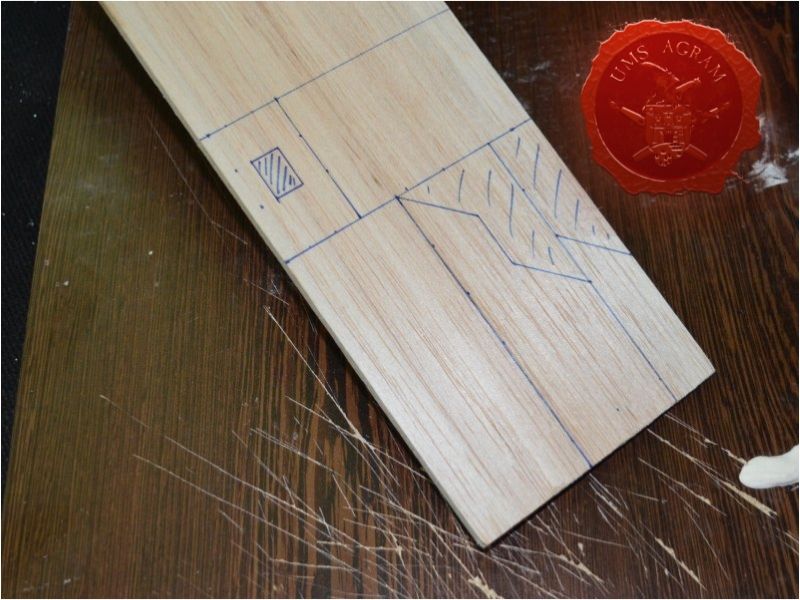
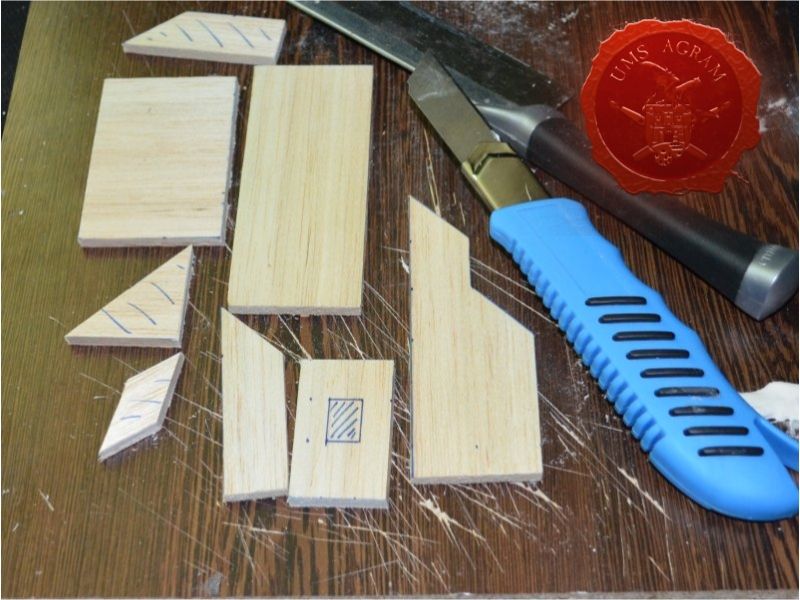
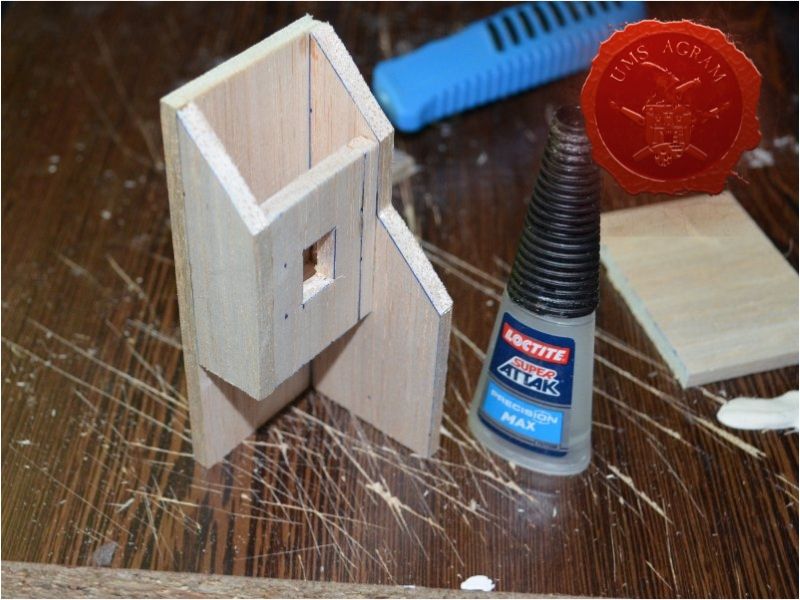
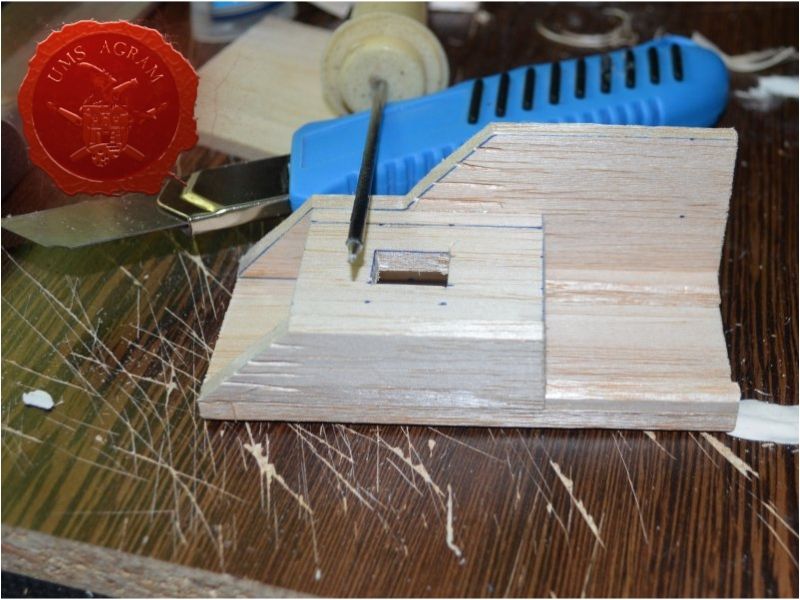
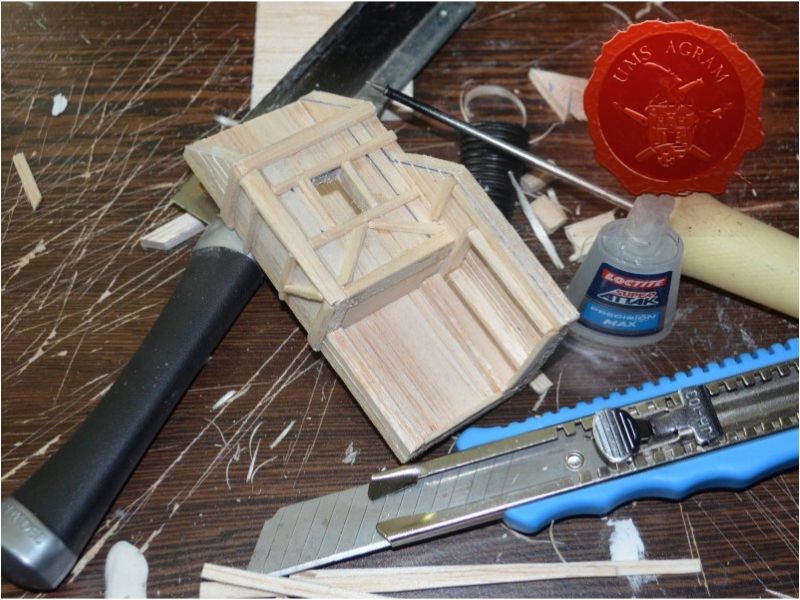
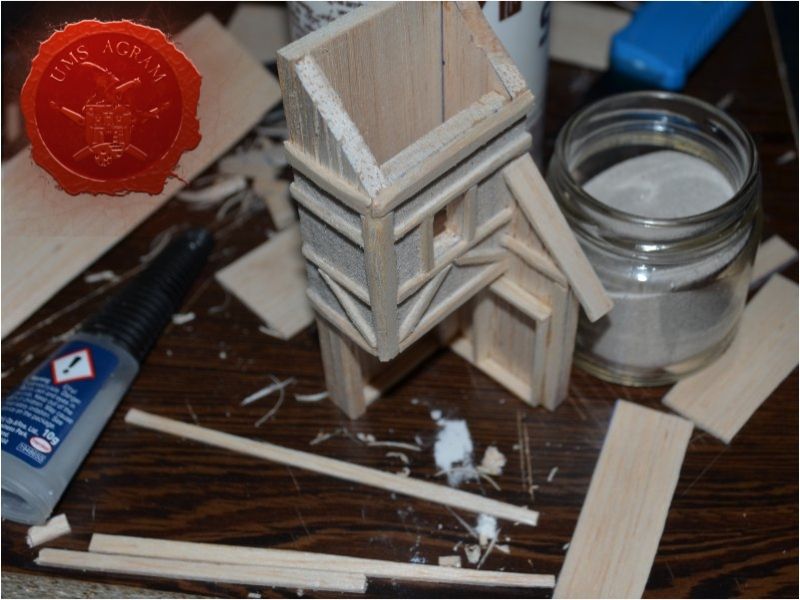
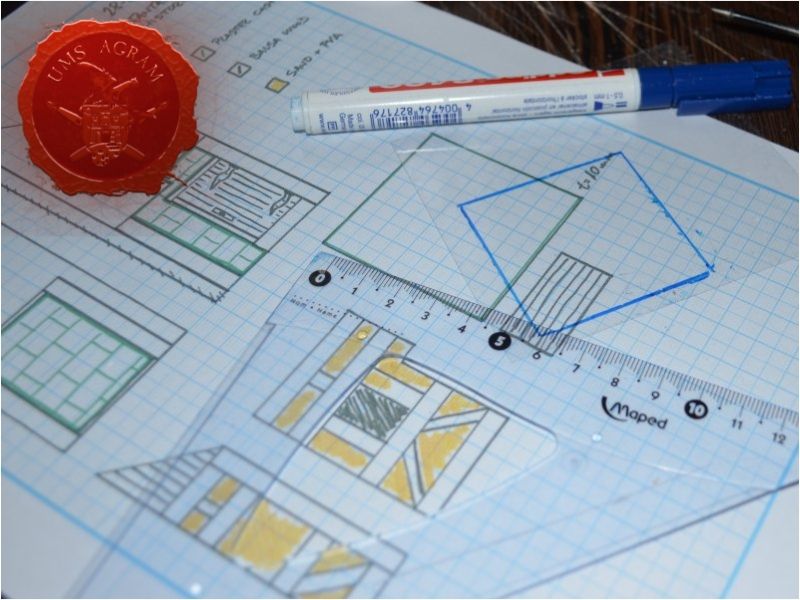
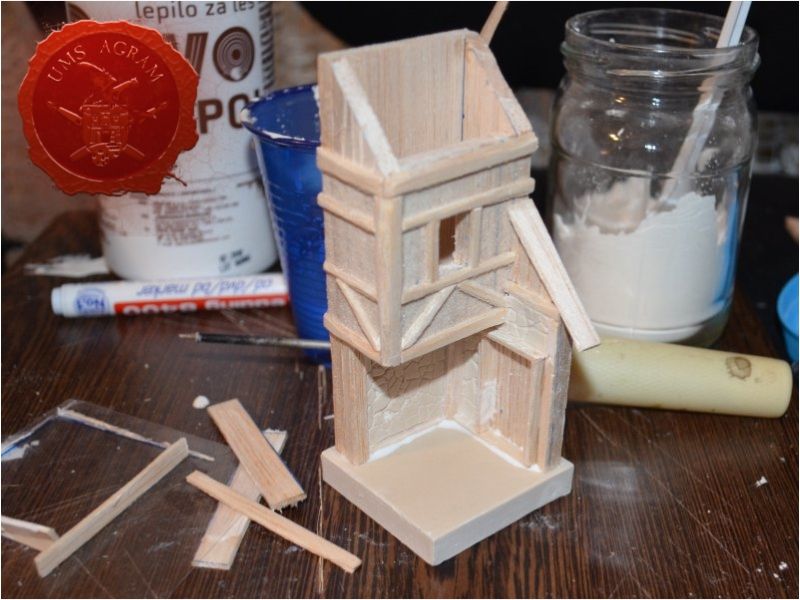
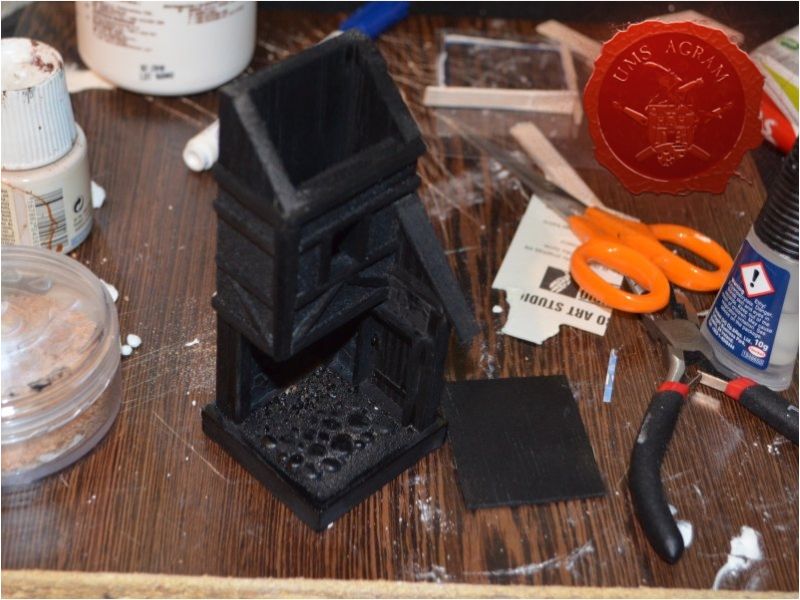
First task was to draw the outlines of the walls on a piece of 4 or 5 mm thick balsa wood (you will notice a little later in the article, that there was a blueprint made for the workshop with all the dimensions), then using a scalpel blade cut out the wall pieces. Make sure the wood grain is in correct position relative to the position of the wall on the vignette. Using superglue, fix the walls together. Next up was carving the wood planks using a simple ice pick. Once done, carve the 1mm thick balsa wood into several 5mm wide planks and glue them in place using superglue. To finish the rough part of building the inn, add the texture of the façade using PVA glue and chinchilla sand (smallest grain sand you can find).
PLASTER
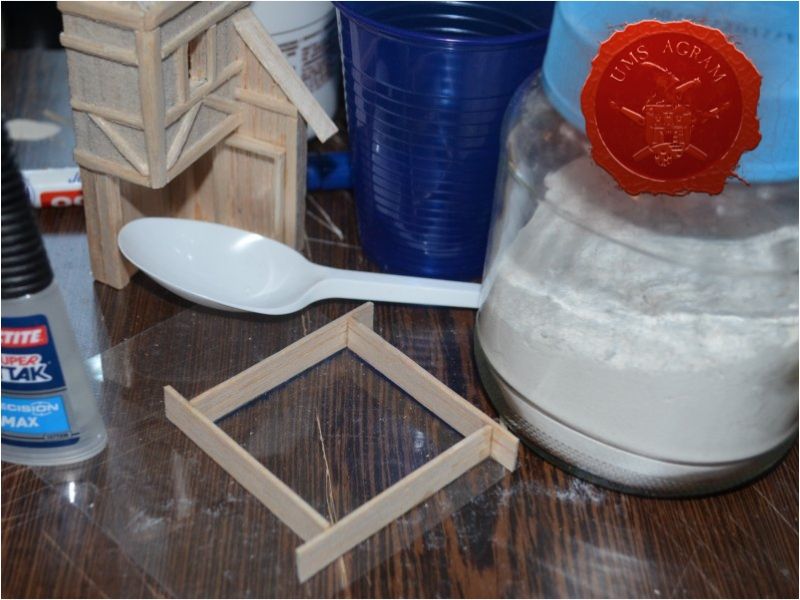
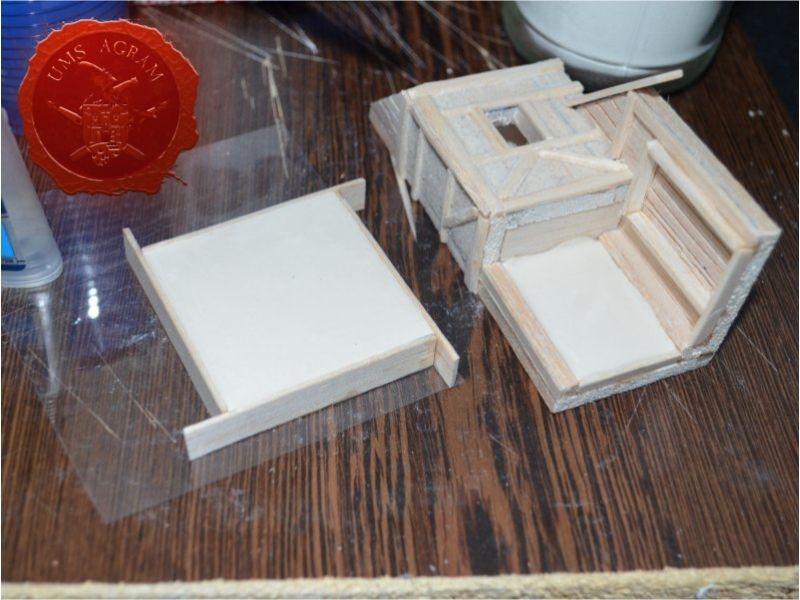
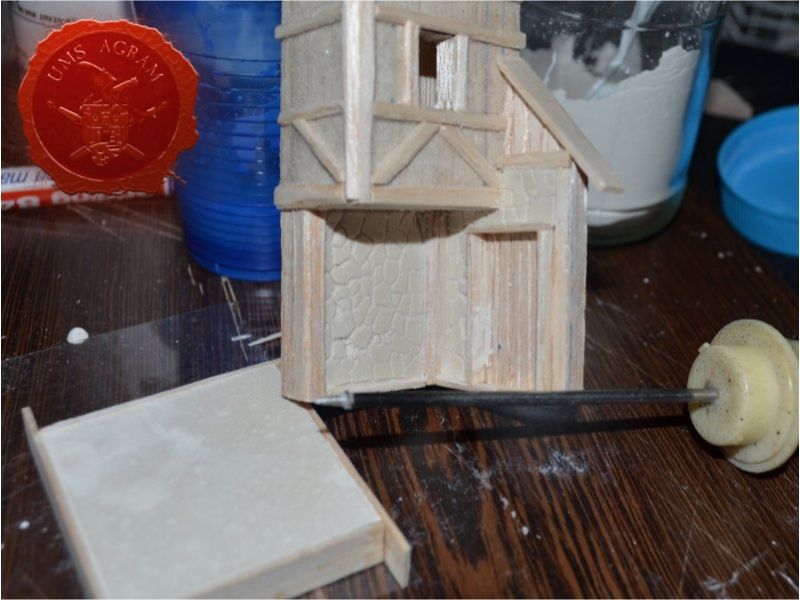
We then proceeded to make the base and stone parts of the building. For the base, we needed a mould that we made from clear plastic foil and some 1mm thick balsa wood leftovers glued with superglue (just to speed the process). When the mould was dry, we mixed some plaster and cast it into the mould. The stone wall was cast directly onto the balsa wood structure of the building and once the plaster was dry, it was carved again using a simple icepick. The building was then glued to the base using PVA glue.
DAS CLAY AND SAND
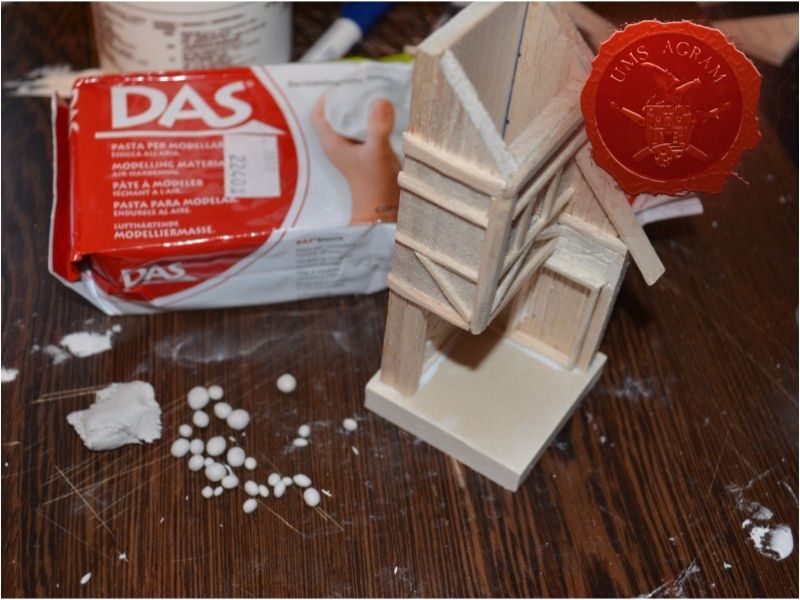
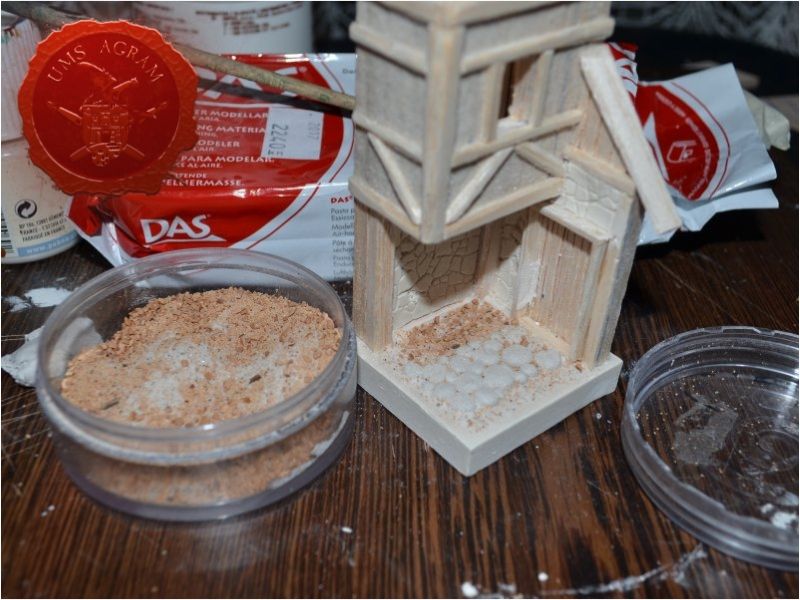
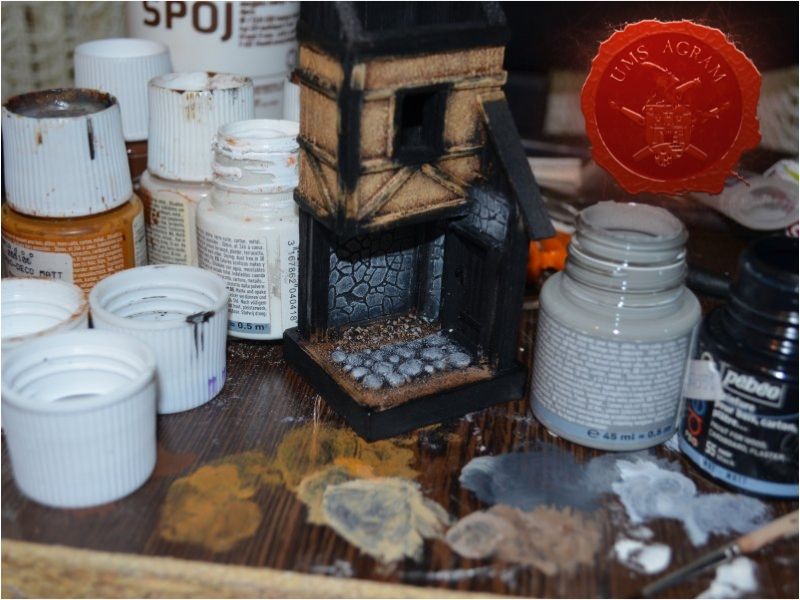
Using DAS air-drying clay we made stones for the cobble stone path. The blobs of clay were glued in place using PVA glue and sprinkled over using sand in two different sizes.
CARD AND PINS
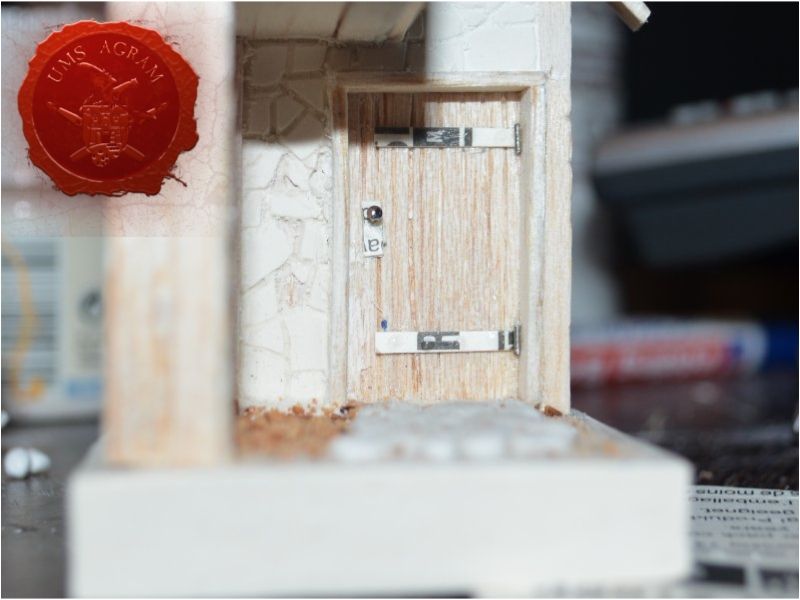
Final, metal parts were done using ordinary card (or thicker paper) and some metal pins.
PAINTING
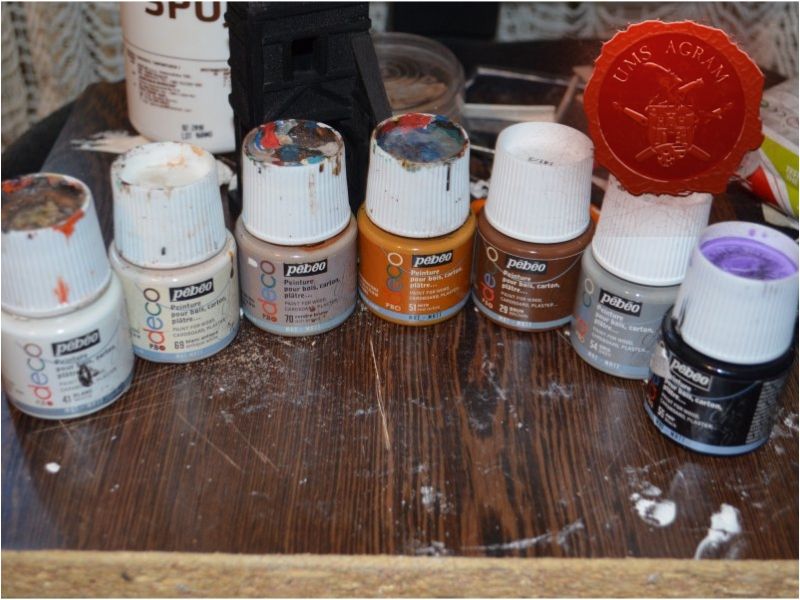
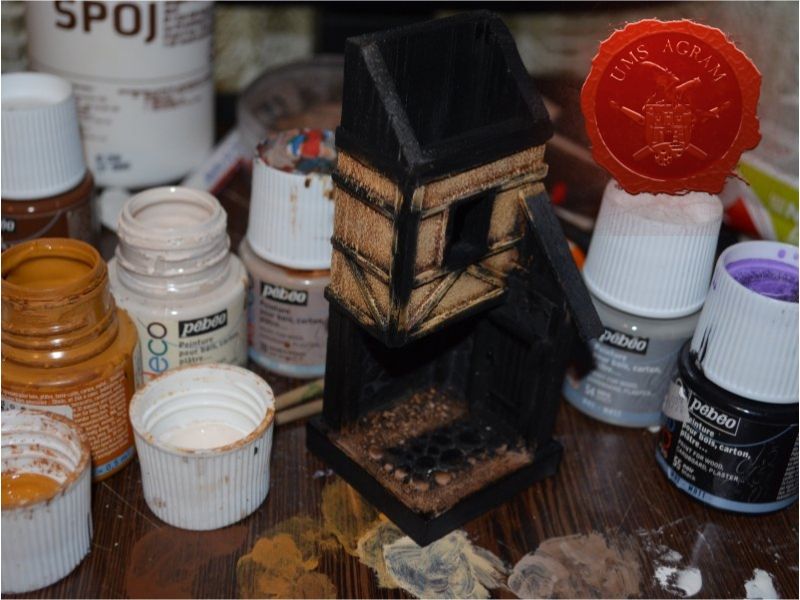
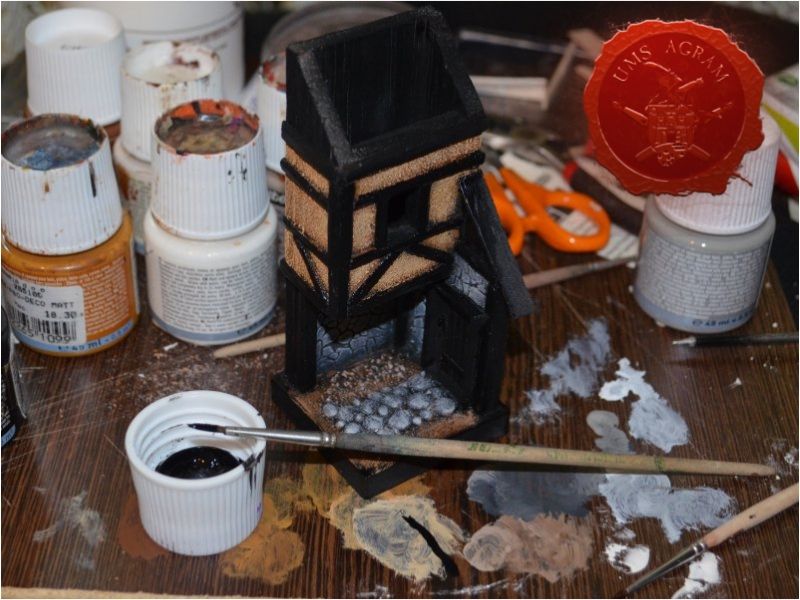
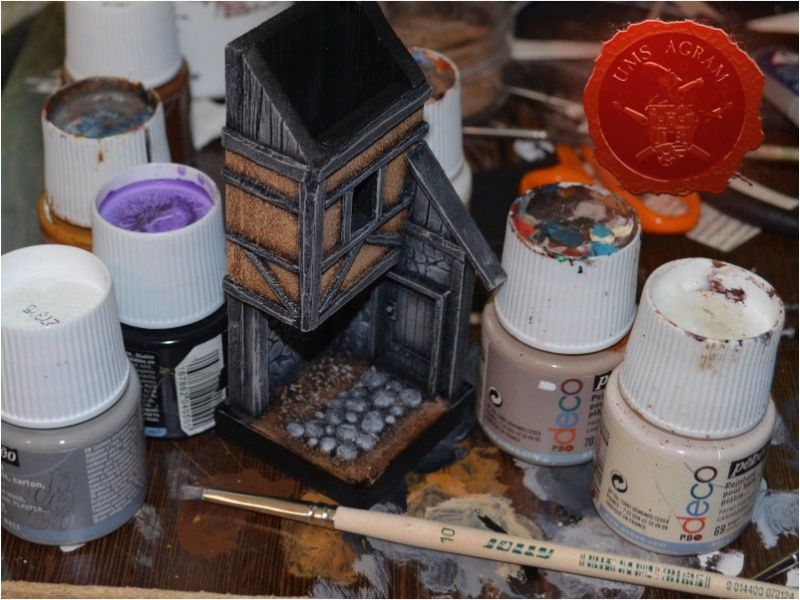
To paint the vignette we used PEBEO DECO colours: White, Antique White, Ash, Ocre, Brown, Grey and Black.
ROOF AND VEGETATION
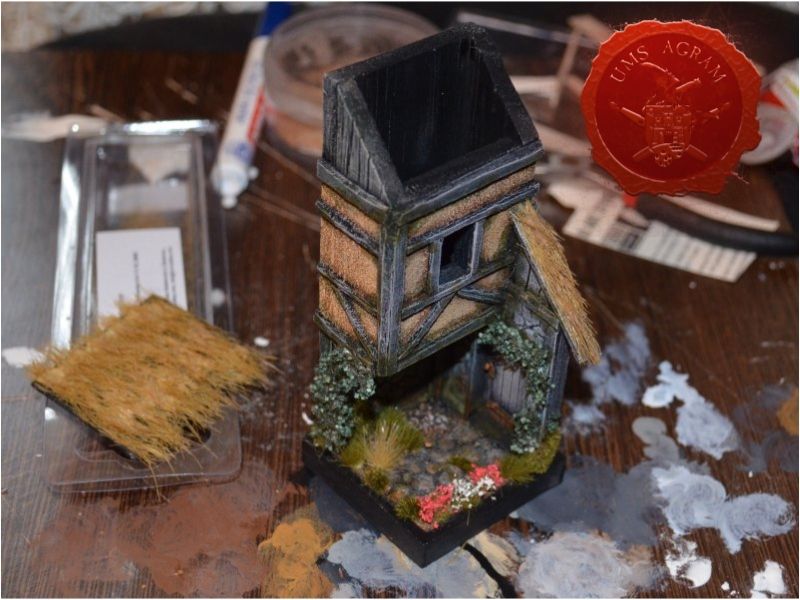
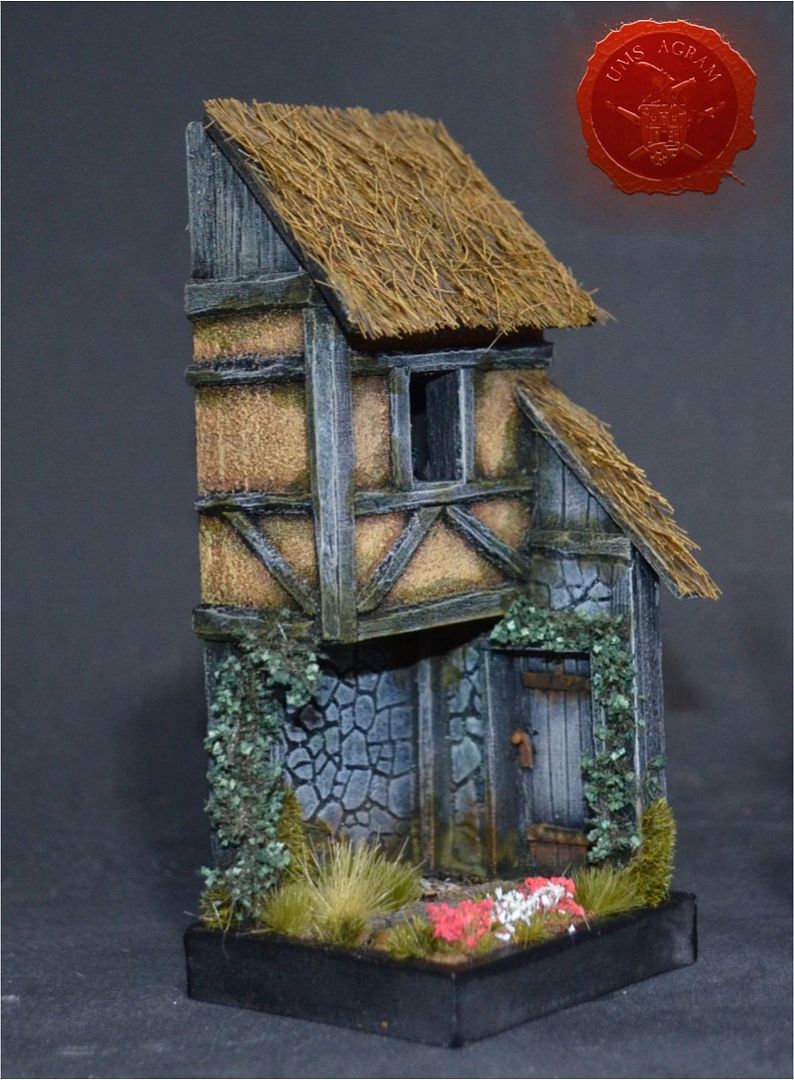
Straw roof was made from 12mm long beige static grass. The vegetation used was: 2mm, 5mm and 6mm tufts; flower tufts and poison ivy on the walls.

Latest articles
-
Agram Group Build #7 – Amon Hen, pt.2
array(2) { ["Article"]=> array(10) { ["id"]=> string(3) "527" ["member_id"]=> string(2) "64" ["title_eng"]=> string(39) "Agram Group Build #7 – Amon Hen, pt.2" ["title_hrv"]=> string(40) "Agram Group Build #7 – Amon Hen, dio 2" ["mask_eng"]=> string(32) "agram_group_build_7_amon_hen_pt2" ["mask_hrv"]=> string(34) "agram_group_build_7_amon_hen_dio_2" ["content_eng"]=> string(6192) "Krunoslav Belinić, 24th September 2026Agram Group Build is back. For this seventh installment, the team decided to create a gaming board/diorama for Amon Hen. To that end, we fulfilled a childhood dream and acquired the original Forge World Amon Hen terrain (released around 2000) along with the accompanying set of miniatures. This series of articles will document the entire project—from crafting the terrain to assembling and painting the miniatures.
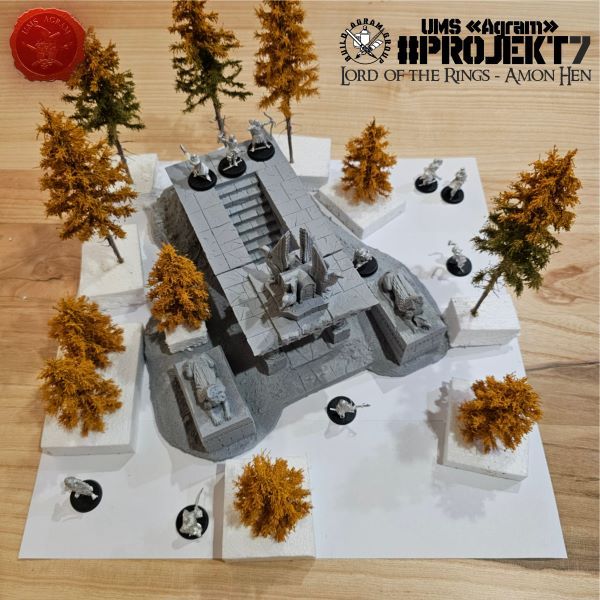
After cutting the board in the previous article, it was time to create the terrain. We decided to achieve the necessary height—or volume—by using Styrofoam. The choice of material was dictated by the availability of Styrofoam; had we possessed that amount of extruded polystyrene (XPS) foam, we certainly would have chosen it due to its ease of shaping. We arranged the Styrofoam sheets to cover the entire surface of the board, gluing them down with PVA glue and reinforcing the joints with masking tape. Next, we placed the assembled Amon Hen model in position and traced its outlines.


The next step was cutting out the rough shape of the terrain and arranging tall vegetation across the diorama to establish the outlines of the final look.


After marking the placement of the trees, we decided to glue the Styrofoam terrain piece onto the board. We used PVA glue for this as well, and to ensure firm contact, we secured the edges with masking tape so the Styrofoam wouldn't warp while drying. Finally, we constructed a ramp for the temple entrance.


In the meantime, Kruno was working on the preparatory work on the figures.


" ["content_hrv"]=> string(6116) "
Agram Group Build se vraća. U svojoj sedmoj instalaciji, ekipa je odlučila izraditi igraću tablu / dioramu za Amon Hen. Za tu potrebu, ispunili smo si dječačke sne i nabavili originalni Forge World teren Amon Hena (izašao negdje cca 2000.) sa setom pripadajućih figura. Ova serija članaka pratit će izradu cijelog projekta – kako izrade terena, tako i sastavljanja i bojanja figura.
Nakon rezanja table u prošlom članku, došao je red na izradu terena. Visinu, odnosno volumen, smo odlučili dobiti korištenjem stiropora. Odabir materijala je uvjetovala dostupnost stiropora. Da smo imali tu količinu stirodura, sigurno bismo ga odabrali zbog jednostavnosti obrade. Stiroporne daske smo posložili tako da pokriju cijelu površinu table. Zalijepili smo ih koristeći PVA ljepilo, a spojeve dodatno učvrstili koristeći krep traku. Potom smo stavili složenu maketu Amon Hena i ucrtali obrise
Sljedeći korak bilo je izrezivanje grubog oblika terena i slaganje visoke vegetacije po diorami – tako da dobijemo obrise konačnog izgleda.
Nakon označavanje gdje ide koje drvo, odlučili smo zalijepiti stiroporni teren na dasku. To smo također odradili pomoću PVA ljepila – a za dodatan pritisak, rubove smo pritisnuli koristeći krep traku tako da se stiropor ne deformira tijekom sušenja. Na kraju smo izradili i kosinu za prilaz u hram.
Za to vrijeme, Kruno se bavio pripremnim radovima na figurama.
" ["created"]=> string(19) "2026-09-24 09:00:59" ["modified"]=> string(19) "2026-09-24 09:00:59" } ["Member"]=> array(10) { ["id"]=> string(2) "64" ["group_id"]=> string(1) "1" ["first_name"]=> string(9) "Krunoslav" ["last_name"]=> string(8) "Belinić" ["first_name_mask"]=> string(9) "krunoslav" ["last_name_mask"]=> string(7) "belinic" ["username"]=> string(5) "Kruno" ["password"]=> string(40) "eb3fda45fbec0258e90d809803b10491c548b22f" ["born"]=> string(19) "2015-01-18 09:19:00" ["created"]=> string(19) "2015-01-18 09:20:39" } } -
Signs for your plinths
array(2) { ["Article"]=> array(10) { ["id"]=> string(3) "526" ["member_id"]=> string(2) "35" ["title_eng"]=> string(23) "Signs for your plinths " ["title_hrv"]=> string(21) "Natpisi za vaše baze" ["mask_eng"]=> string(22) "signs_for_your_plinths" ["mask_hrv"]=> string(20) "natpisi_za_vase_baze" ["content_eng"]=> string(4401) "Marko Paunović, 24th September 2026This article will cover creating nameplates for your display figure bases. I have been considering the option of printed nameplates for quite some time, and these are the results I achieved after a bit of effort and research.
The 3D engraved nameplates I usually use are quite expensive (around €10 apiece) and require preparation, ordering from an engraving studio, and waiting for the work to be completed. Consequently, my practice has been to place only one or two orders a year, mostly before our "Black Queen" event. Another major drawback is that these nameplates are made of plastic and cannot be bent, which automatically rules out round plinths.

After a bit of research, the results showed that miniaturists quite often use printed paper signs. What I saw in person was that these signs are very glossy, and online research revealed that they are printed on photo paper. So, I decided to try it out myself. First, I created the design for the sign.

Before looking for a photo studio, I decided to print it out on plain paper first to see what it looked like.


Even when I put up those signs on plain paper, the result wasn't bad.

The hardest part of the whole process was finding a photo studio. It is incredible how few of them there are (that aren't just photocopy shops). I managed to find one relatively close to where I work and ordered two sets of two 10x15 cm photos—I decided to get two copies of each shot just in case something went wrong and I needed a backup.

In total, the four photos cost me just under €2.00 (one-fifth of the price of a single plastic, engraved sign).

The final result on the bases is more than satisfactory! Would bang 10/10.
" ["content_hrv"]=> string(4472) "
Ovaj članak će se baviti izradom natpisa za baze za vaše display figure. Već dulje vrijeme razmišljam o opciji printanih natpisa i ovo su rezultati do kojih sam došao nakon malo truda i istraživanja.
3D gravirani natpisi koje normalno koristim podosta su skupi (10ak € po komadu) i zahtijevaju pripremu pa naručivanje u nekom studiju za graviranje pa čekanje da oni to odrade. Tako da mi je do sada praksa bila jedna do dvije narudžbe godišnje, uglavnom prije našeg Black Queena. Drugi glavni nedostatak je da su ti natpisi plastični te se ne mogu savijati što automatski isključuje okrugle baze.
Nakon malo istraživanja, rezultati su pokazali da minijaturisti dosta često koriste printane natpise na papiru. Ono što sam uživo vidio jest da su to jako sjajni (glossy) natpisi, a online istraživanje je pokazalo da su to natpisi na foto papiru. Stoga, sam odlučio isprobati kako to funkcionira. Prvo sam napravio dizajn natpisa.
Prije potrage za foto studijom, odlučio sam isprintati prvo na običan papir da vidim kako to izgleda.
Čak i kada sam postavio te natpise na običnom papiru, rezultat nije bio loš.
Najteži dio cijelog procesa bila je potraga za foto studijom. Nevjerojatno je koliko ih malo ima (a da nisu fotokopiraone). Uspio sam naći jedan relativno blizu mjesta gdje radim te naručio izradu dva puta po dvije fotografije 10x15cm – odlučio sam za svaki slučaj svaku fotku dva puta napraviti tako da ako nešto pođe u krivo da imam rezervu.

Sveukupno su me 4 fotografije ispale nešto ispod 2,00€ (jedna petina cijene jednog plastičnog, graviranog natpisa).
Završni rezultat na bazama je više nego zadovoljavajuć! Would bang 10/10.
" ["created"]=> string(19) "2026-09-24 08:34:44" ["modified"]=> string(19) "2026-09-24 08:34:44" } ["Member"]=> array(10) { ["id"]=> string(2) "35" ["group_id"]=> string(1) "1" ["first_name"]=> string(5) "Marko" ["last_name"]=> string(9) "Paunović" ["first_name_mask"]=> string(5) "marko" ["last_name_mask"]=> string(8) "paunovic" ["username"]=> string(5) "marko" ["password"]=> string(40) "3bd37b326d19d1880d3b93a4b32e8fb3a90fa122" ["born"]=> string(19) "2033-03-07 20:35:00" ["created"]=> string(19) "2009-06-02 20:37:03" } } -
We attended: Days of Technical Culture 2026
array(2) { ["Article"]=> array(10) { ["id"]=> string(3) "525" ["member_id"]=> string(2) "35" ["title_eng"]=> string(43) "We attended: Days of Technical Culture 2026" ["title_hrv"]=> string(50) "Nastupili smo na: XV danima tehničke kulture 2026" ["mask_eng"]=> string(42) "we_attended_days_of_technical_culture_2026" ["mask_hrv"]=> string(48) "nastupili_smo_na_xv_danima_tehnicke_kulture_2026" ["content_eng"]=> string(5943) "Marko Paunović, 23th September 2026
On Friday and Saturday, 18 and 19 Sept 2026, we participated in the Technical Culture Days at the Technical Museum. At our stand, visitors could discover the world of miniatures, and we were especially delighted by the interest shown by children who picked up a paintbrush for the first time.

Kruno and the team did a fantastic job guiding them through the initial steps of coloring. There was a mix of concentration, joy, and the occasional serious question about which color best suited the little hero. Interest was so high that the workspace around our stand quickly became cramped. For next year, we would love to see more space for workshops so that everyone can sit down comfortably and try their hand at painting.


I have participated in the Technical Culture Days for years, ever since the event was held in Dubrava. For me, the Nikola Tesla Technical Museum represents a major step forward: the venue lends a special atmosphere to the event, and the turnout this year was phenomenal. I was also pleasantly surprised by the other exhibitors' stands. It was a real pleasure to walk among them and see the fascinating things people are creating and sharing with visitors.


You can find more photos on our social media.

On Friday, our Marko gave a presentation titled "Miniaturism – A World in Miniature," in which he described to all those present the projects and programs organized by the Association, as well as everything we offer to our fellow citizens!


Thank you to everyone who stopped by, asked a question, or painted their first miniature. I look forward to next year—with just as many curious visitors and, I hope, a few more tables for brushes.
" ["content_hrv"]=> string(5895) " U petak i subotu, 18. i 19. rujna 2026., smo sudjelovali na Danima tehničke kulture u Tehničkom muzeju. Na našem su štandu posjetitelji mogli upoznati svijet minijatura, a najviše nas je razveselio interes djece koja su prvi put uzela kist u ruke.
Kruno i ekipa sjajno su ih vodili kroz prve korake bojanja. Bilo je koncentracije, veselja i pokojeg ozbiljnog pitanja o tome koja boja najbolje pristaje malom junaku. Interes je bio toliko velik da nam je prostor za rad oko štanda brzo postao tijesan. Za iduću godinu voljeli bismo vidjeti nešto više mjesta za radionice, kako bi svatko mogao mirno sjesti i okušati se u bojanju.
Na Danima tehničke kulture sudjelovao sam godinama, još dok su se održavali u Dubravi. Tehnički muzej Nikola Tesla za mene je velik korak naprijed: prostor daje događaju posebnu atmosferu, a posjećenost je ove godine bila fenomenalna. Štandovi drugih izlagača također su me ugodno iznenadili. Bilo je pravo zadovoljstvo prošetati među njima i vidjeti koliko zanimljivih stvari ljudi stvaraju i dijele s posjetiteljima.
Više fotografija pogledajte na našim društvenim mrežama
U petak, naš Marko je održao predavanje pod nazivom MINIJATURIZAM – Svijet u malom u kojem je svim prisutnima opisao projekte i programe koje Udruga organizira i što sve nudimo našim sugrađanima!
Hvala svima koji su zastali kod nas, postavili pitanje ili obojali svoju prvu minijaturu. Veselim sei dućoj godini — uz jednako puno znatiželjnih posjetitelja i, nadam se, koji stol više za kistove.
" ["created"]=> string(19) "2026-09-23 06:21:31" ["modified"]=> string(19) "2026-09-23 06:21:31" } ["Member"]=> array(10) { ["id"]=> string(2) "35" ["group_id"]=> string(1) "1" ["first_name"]=> string(5) "Marko" ["last_name"]=> string(9) "Paunović" ["first_name_mask"]=> string(5) "marko" ["last_name_mask"]=> string(8) "paunovic" ["username"]=> string(5) "marko" ["password"]=> string(40) "3bd37b326d19d1880d3b93a4b32e8fb3a90fa122" ["born"]=> string(19) "2033-03-07 20:35:00" ["created"]=> string(19) "2009-06-02 20:37:03" } } -
Agram Group Build #7 – Amon Hen, pt.1
array(2) { ["Article"]=> array(10) { ["id"]=> string(3) "524" ["member_id"]=> string(2) "35" ["title_eng"]=> string(39) "Agram Group Build #7 – Amon Hen, pt.1" ["title_hrv"]=> string(40) "Agram Group Build #7 – Amon Hen, dio 1" ["mask_eng"]=> string(32) "agram_group_build_7_amon_hen_pt1" ["mask_hrv"]=> string(34) "agram_group_build_7_amon_hen_dio_1" ["content_eng"]=> string(3812) "Marko Paunović, 14th September 2026Agram Group Build is back. For this seventh installment, the team decided to create a gaming board/diorama for Amon Hen. To that end, we fulfilled a childhood dream and acquired the original Forge World Amon Hen terrain (released around 2000) along with the accompanying set of miniatures. This series of articles will document the entire project—from crafting the terrain to assembling and painting the miniatures.
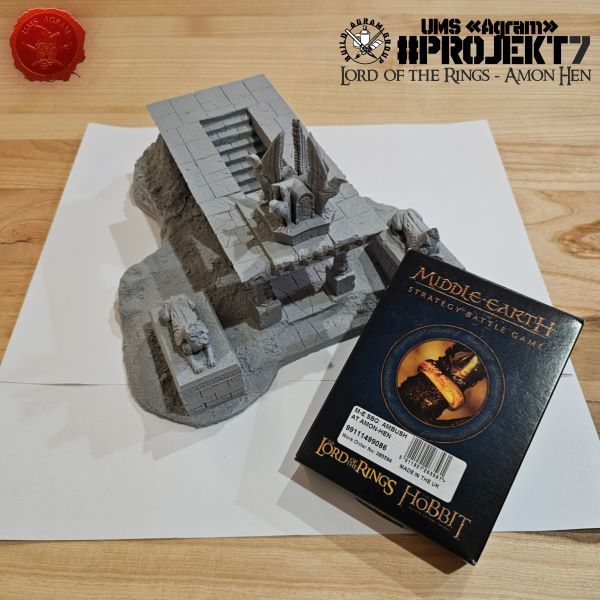
The idea from the start was to create a diorama of the famous scene from *The Lord of the Rings* where Boromir falls in battle and the Uruk-hai abduct two—fortunately, the wrong—Hobbits. Ideally, we envisioned everything fitting onto a 40 x 40 cm board. So, the first step was to verify this; we used two sheets of A3 paper to create a square of roughly the desired size.
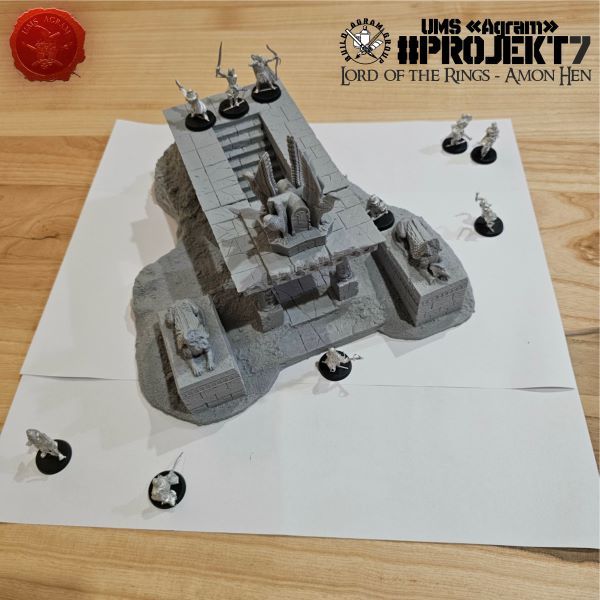
Figures and terrain fit perfectly for the board of that size. However, this should also be a diorama, so we checked how everything works together with vegetation. Fortunately, before the terrain and figures arrived, we also acquired appropriate autumn trees.
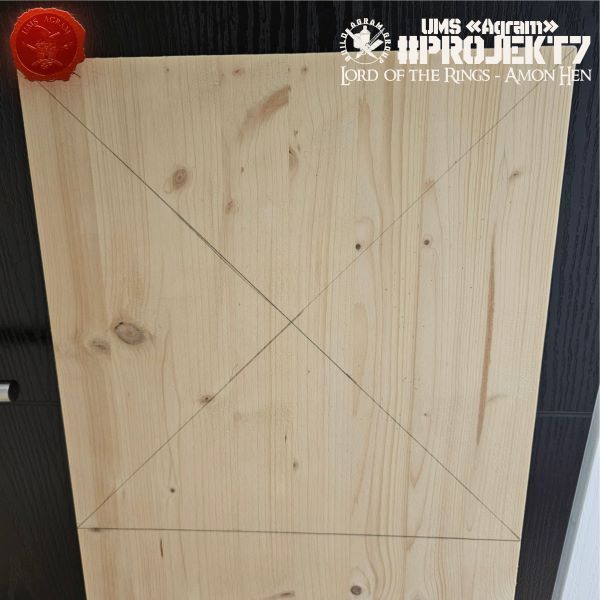
Once the concept was confirmed, we could get to work on making the base for the board. We used a 130 x 40 x 2 cm plank—originally a shelf—for this purpose. We marked two diagonals on it to outline a 40 x 40 cm square, then applied masking tape over the area to protect the wood during sawing.
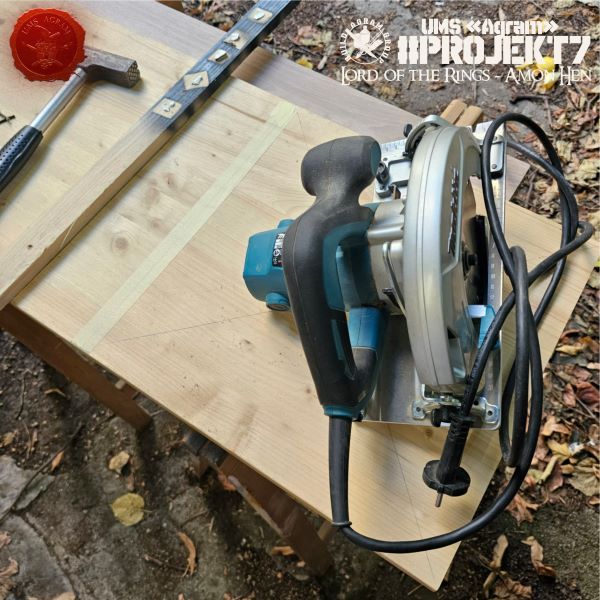
Then, we cut the board to the desired size using a circular saw. After cutting, we sanded both cut edges.
And with that, preparations for the first collaborative project are complete. We have everything ready for the presentation at the Technical Culture Days, where our Marko will conduct demonstration workshops—specifically, demonstrations on creating a spatial model—based on this very project.
" ["content_hrv"]=> string(3729) "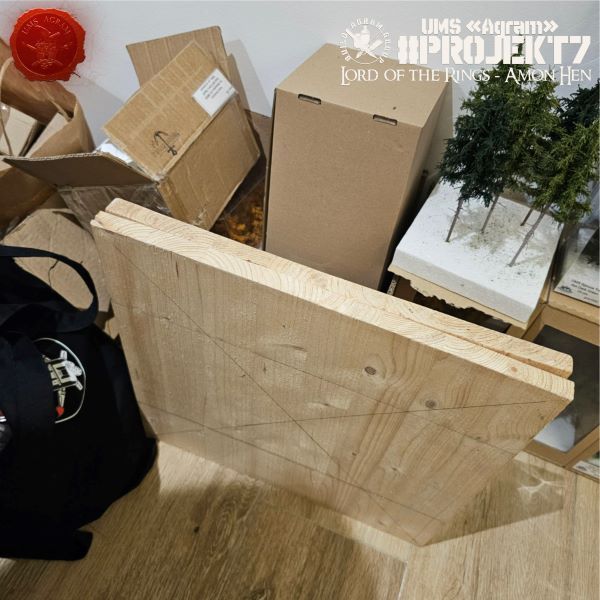
Agram Group Build se vraća. U svojoj sedmoj instalaciji, ekipa je odlučila izraditi igraću tablu / dioramu za Amon Hen. Za tu potrebu, ispunili smo si dječačke sne i nabavili originalni Forge World teren Amon Hena (izašao negdje cca 2000.) sa setom pripadajućih figura. Ova serija članaka pratit će izradu cijelog projekta – kako izrade terena, tako i sastavljanja i bojanja figura.
Ideja od početka bila je da napravimo dioramu poznate scene iz Gospodara prstenova gdje Boromir pogiba, a Uruk Hai otimaju dva, srećom pogrešna, Hobita. Idealno u našim zamislima sve bi stalo na tablu 40 x 40 cm. Stoga prvo je to trebalo provjeriti. Od dva A3 papira napravili smo kvadrat otprilike željene veličine.
Figure i teren taman pašu za tablu te dimenzije. Međutim, ovo bi trebala biti i diorama, stoga smo provjerili kako sve zajedno funkcionira i sa vegetacijom. Na svu sreću, prije nego su došli teren i figure, nabavili smo i prigodno jesensko drveće.
Kad smo potvrdili koncept, mogli smo se baciti na izradu baze za tablu. Za to nam je poslužila daska 130 x 40 x 2 cm koja je služila kao polica. Na nju smo ucrtali dvije dijagonale i na taj način dobili kvadrat veličine 40 x 40 cm. Zatim smo preko toga prelijepili krep traku kako bismo dasku zaštitili prilikom piljenja.
Zatim smo ispilili dasku na željenu veličinu ručnim cirkularom. Nakon piljenja smo pobrusili oba rezana ruba.
I time su pripreme za prvi zajednički rad završene. Sve smo spremili i pripremili za nastup na Danima tehničke kulture gdje će naš Marko upravo na ovom projektu držati ogledne radionice odn. demonstracije izrade prostorne makete.
" ["created"]=> string(19) "2026-09-14 08:21:00" ["modified"]=> string(19) "2026-09-14 08:21:00" } ["Member"]=> array(10) { ["id"]=> string(2) "35" ["group_id"]=> string(1) "1" ["first_name"]=> string(5) "Marko" ["last_name"]=> string(9) "Paunović" ["first_name_mask"]=> string(5) "marko" ["last_name_mask"]=> string(8) "paunovic" ["username"]=> string(5) "marko" ["password"]=> string(40) "3bd37b326d19d1880d3b93a4b32e8fb3a90fa122" ["born"]=> string(19) "2033-03-07 20:35:00" ["created"]=> string(19) "2009-06-02 20:37:03" } } -
We attended: H.R.E.N. 28 - 2026., Medvode, Slovenia
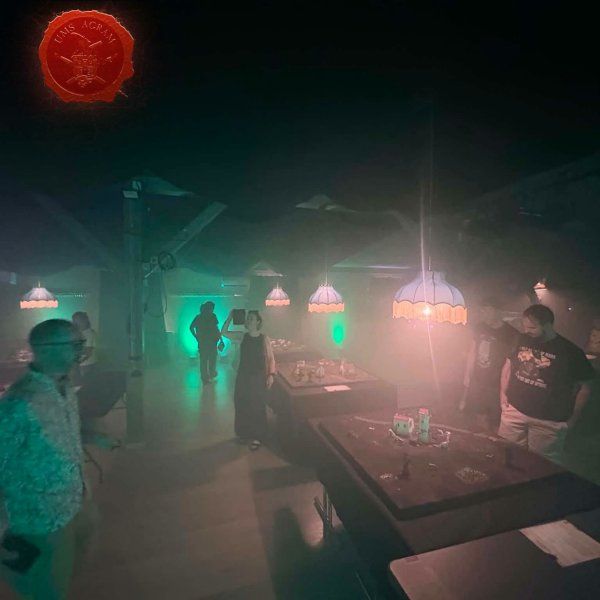
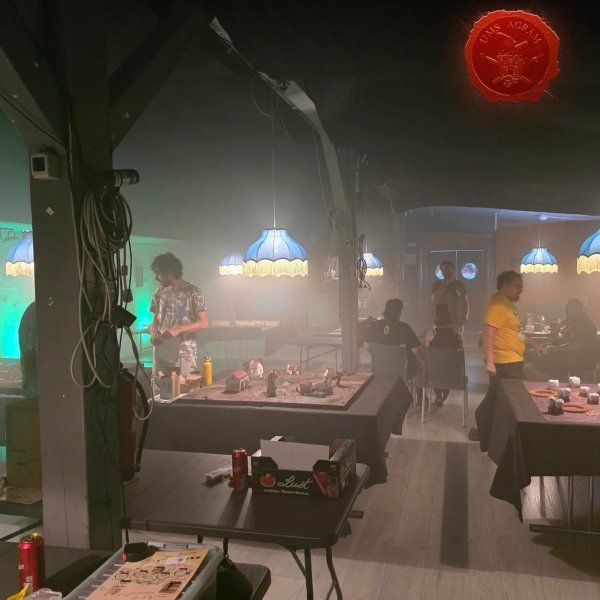
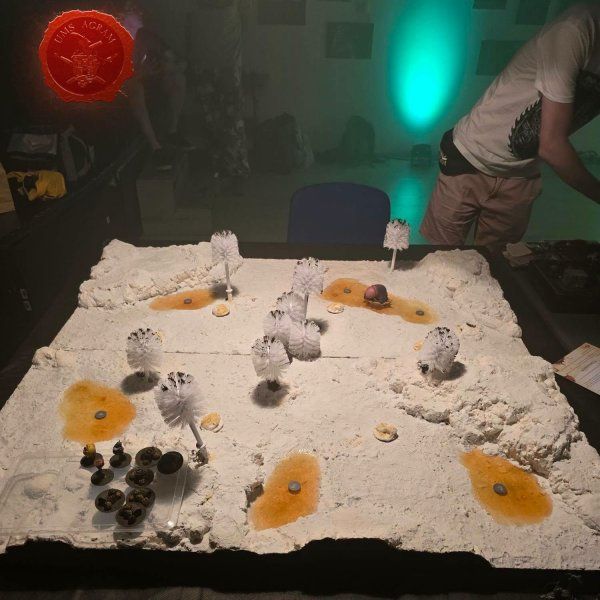
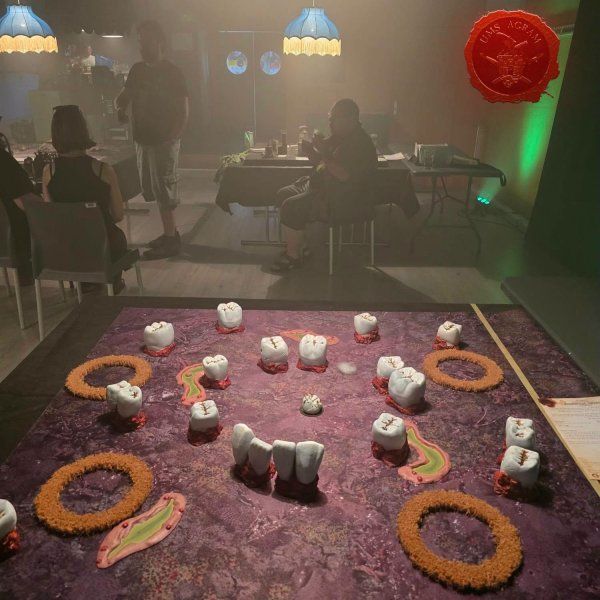
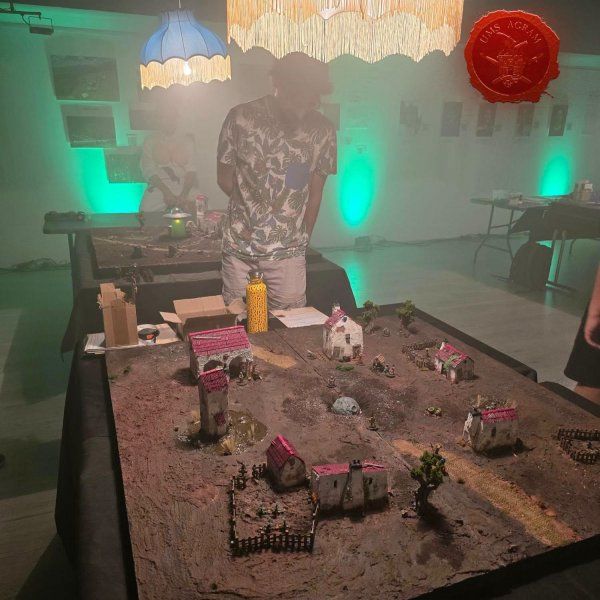
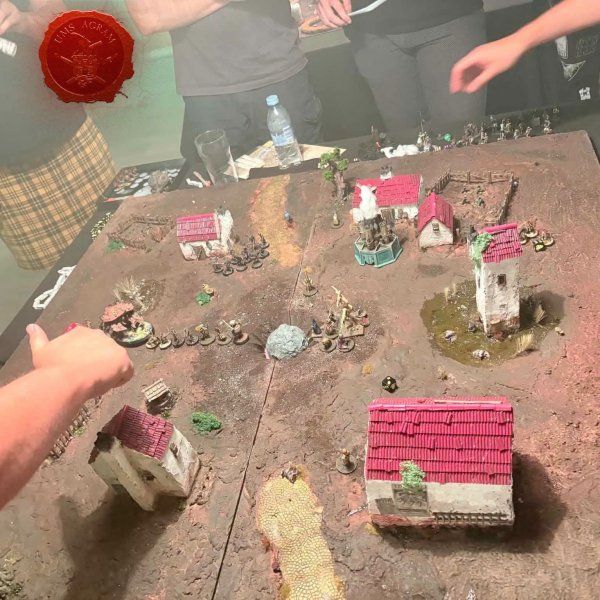
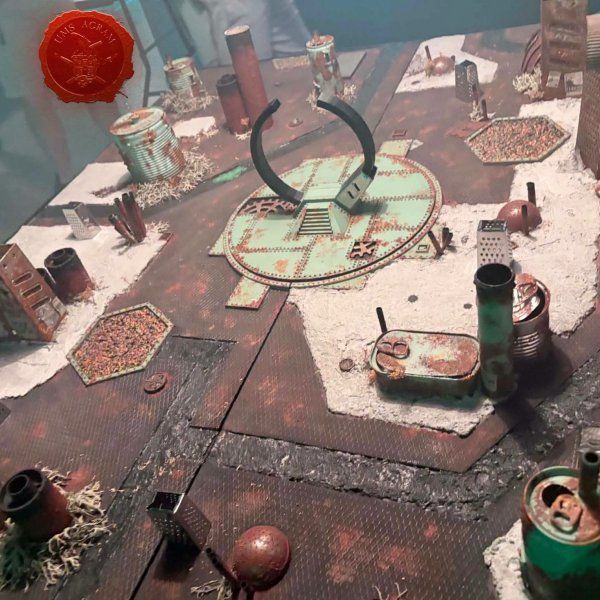
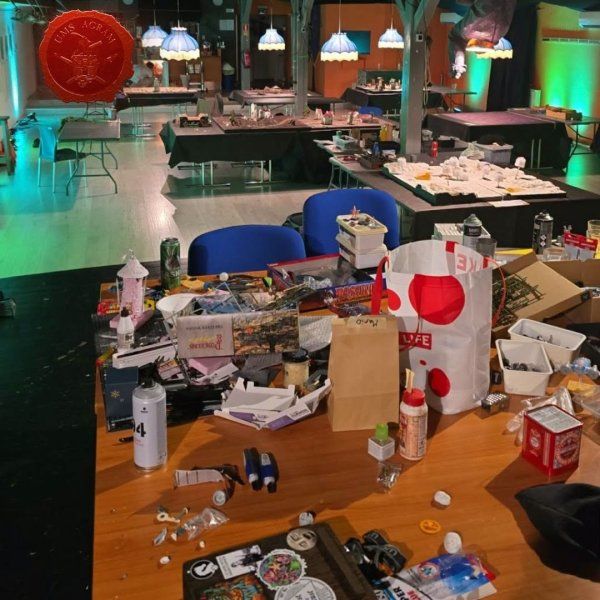
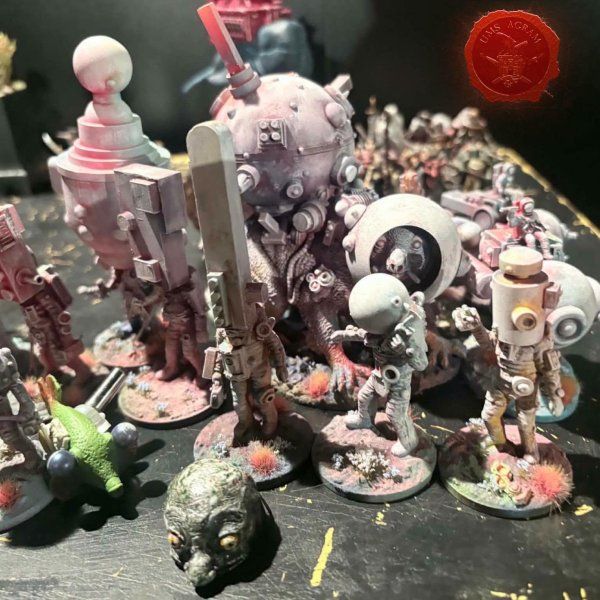
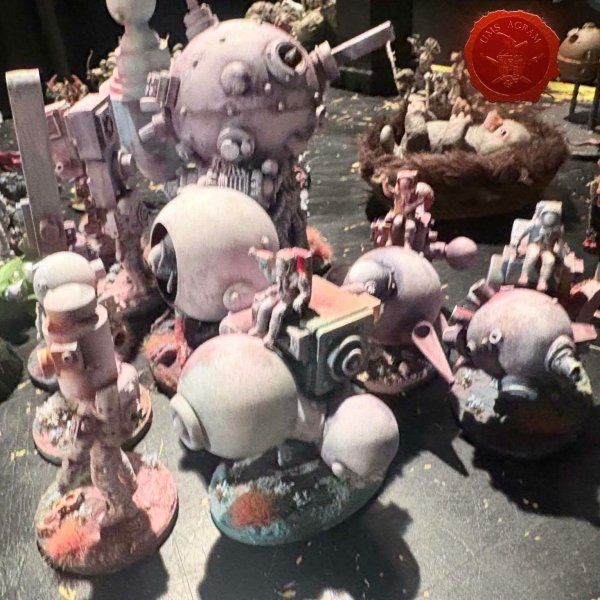
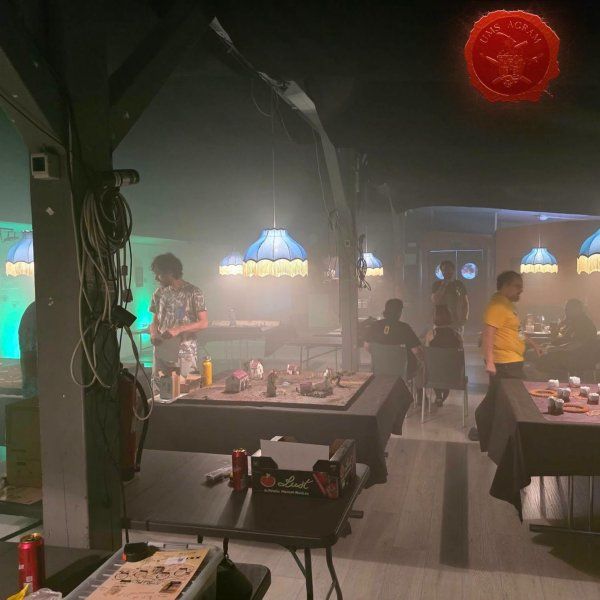
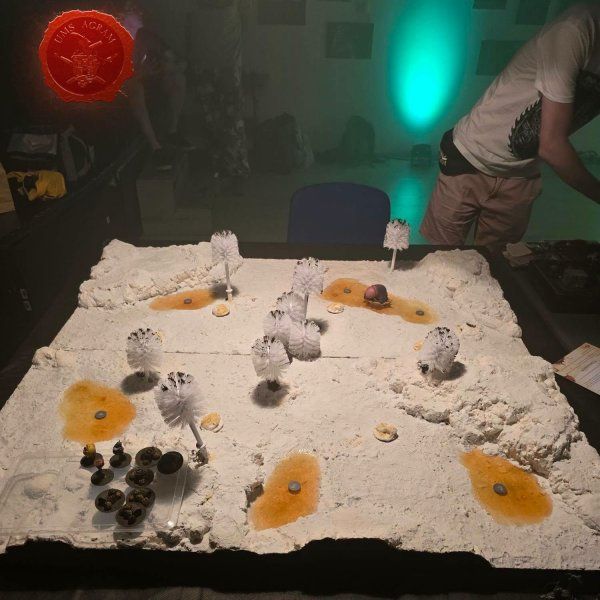
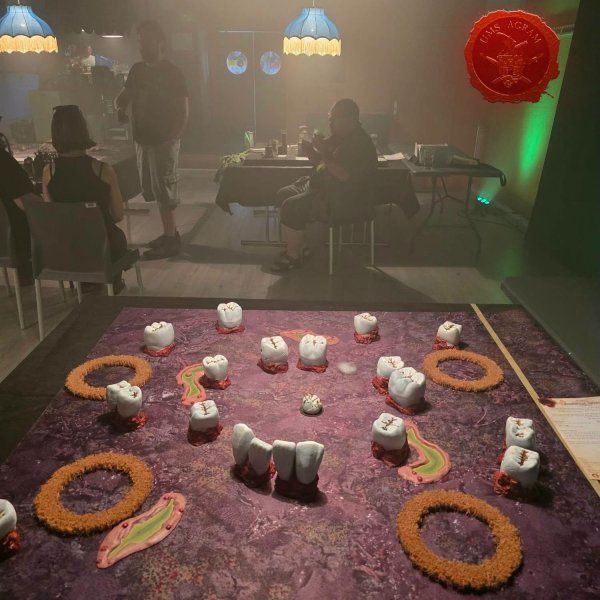
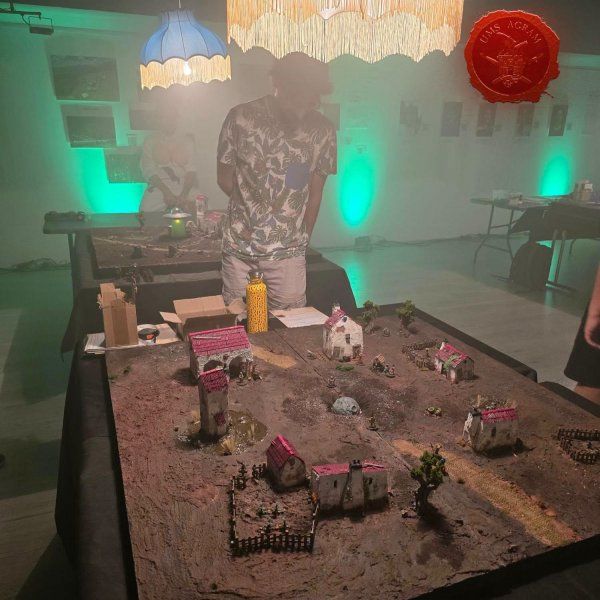
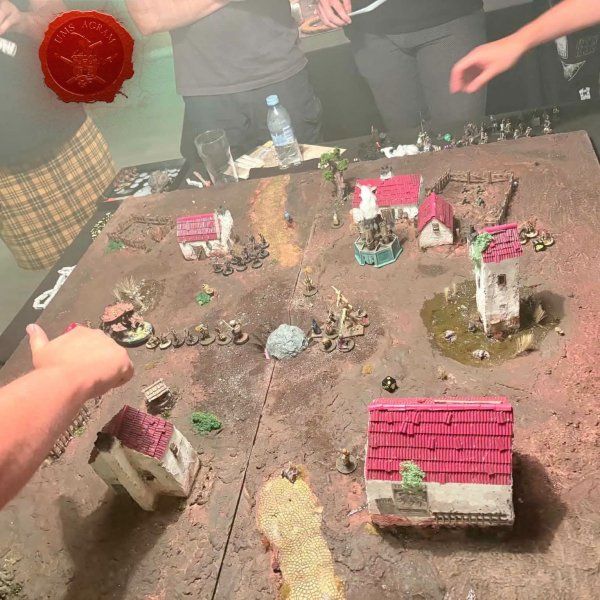
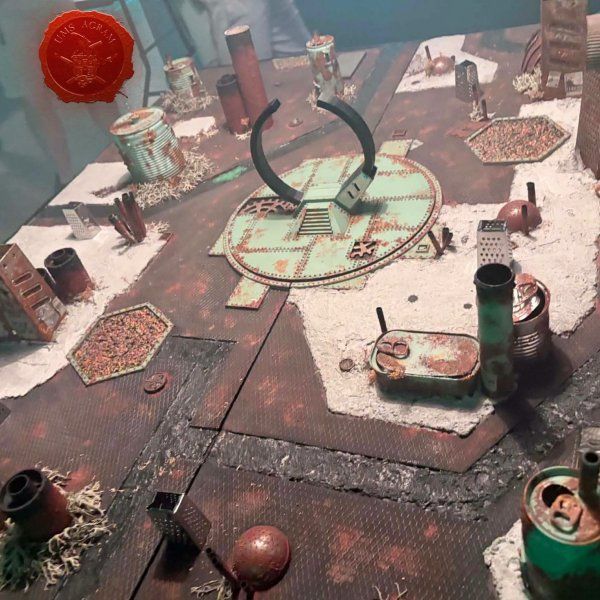
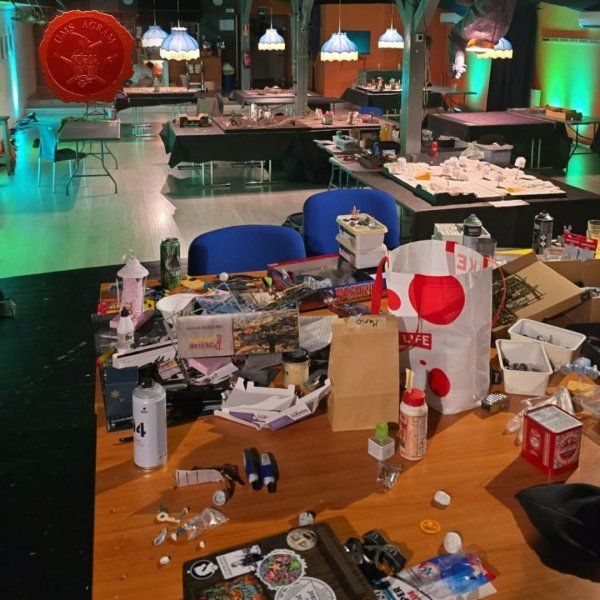
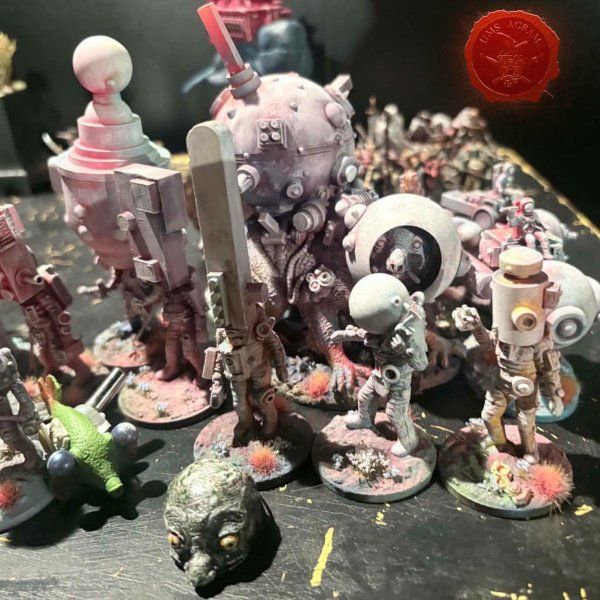
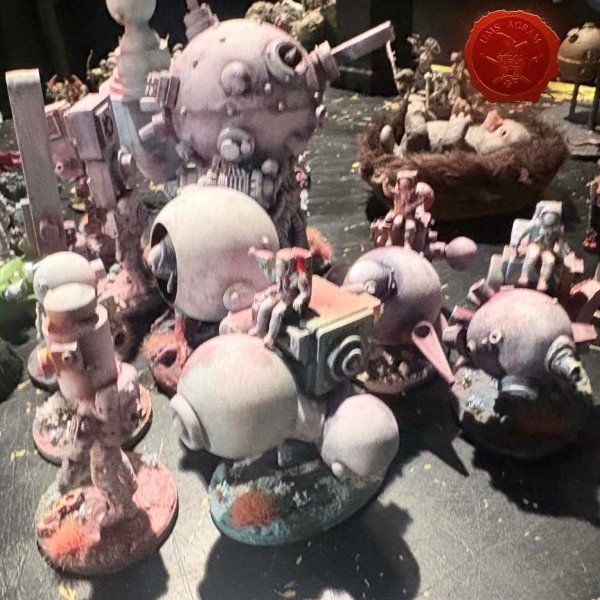
array(2) { ["Article"]=> array(10) { ["id"]=> string(3) "523" ["member_id"]=> string(3) "100" ["title_eng"]=> string(51) "We attended: H.R.E.N. 28 - 2026., Medvode, Slovenia" ["title_hrv"]=> string(54) "Posjetili smo: H.R.E.N. 28 - 2026., Medvode, Slovenija" ["mask_eng"]=> string(43) "we_attended_hren_28_-_2026_medvode_slovenia" ["mask_hrv"]=> string(46) "posjetili_smo_hren_28_-_2026_medvode_slovenija" ["content_eng"]=> string(4468) "Mario Grgurev, 7th September 2026Another success for the Hren organizers! Of the two-day event, the first day was dedicated to the Turnip28 game, and the second to an original game designed by the hosts. Like last year, the tables and courts exceeded the expectations of the players, the scenarios were imaginative, and I enjoyed the interaction between the tables during the game. For example, my first game involved rubbing horseradish roots on the figures during the game, including other tables in the hall. The next day, we played as a fun cooperative game in pairs, in which each pair of players had their own kit-bashani spaceship (which we made before or during the event) with which we had to pick up Tod (a character from last year) and return him to Earth. There was no shortage of chaos. The hosts from Amulet tried to make us comfortable and not hungry or thirsty during the entire event, and I can only say words of praise for their effort and engagement!
" ["content_hrv"]=> string(4572) "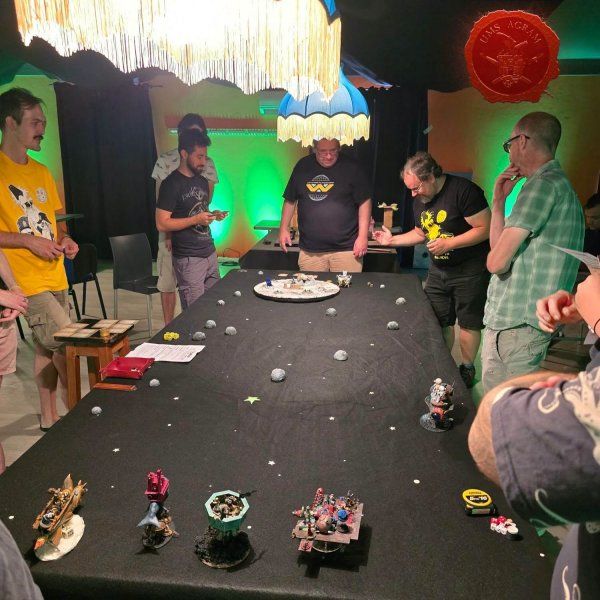
Još jedan uspjeh za organizatore Hren-a! Od dva dana eventa, prvi dan je bio namijenjen igri Turnip28, a drugi za originalnu igru smišljenu od strane domaćina. Kao i prošle godine, stolovi i tereni su nadmašili očekivanja igrača, scenariji su bili maštoviti i zabavljala me interakcija između stolova tijekom igre. Na primjer, moja prva partija uključivala je ribanje korijena hrena po figurama tijekom igre, uključujući i druge stolove u dvorani. Idući dan smo igrali jako zabavnu zajedničku igru u parovima, u kojoj je svaki par igrača imao svoj kit-bashani svemirski brod (koji smo izrađivali prije ili tijekom eventa) kojim smo trebali pokupiti Toda (lik od prošle godine) i vratiti ga na Zemlju. Kaosa nije falilo. Domaćini iz Amuleta su se trudili da nam bude ugodno i da ne budemo ni gladni ni žedni tijekom cijelog vremena održavanja manifestacije i mogu reći samo riječi hvale na trud i angažman!

" ["created"]=> string(19) "2026-09-07 08:20:41" ["modified"]=> string(19) "2026-09-07 08:20:41" } ["Member"]=> array(10) { ["id"]=> string(3) "100" ["group_id"]=> string(1) "2" ["first_name"]=> string(5) "Mario" ["last_name"]=> string(7) "Grgurev" ["first_name_mask"]=> string(5) "mario" ["last_name_mask"]=> string(7) "grgurev" ["username"]=> string(9) "lepimario" ["password"]=> string(40) "11e0b1ecc2c467637dfa513774d2426f3b925264" ["born"]=> string(19) "2045-01-21 09:02:00" ["created"]=> string(19) "2022-01-21 09:02:32" } }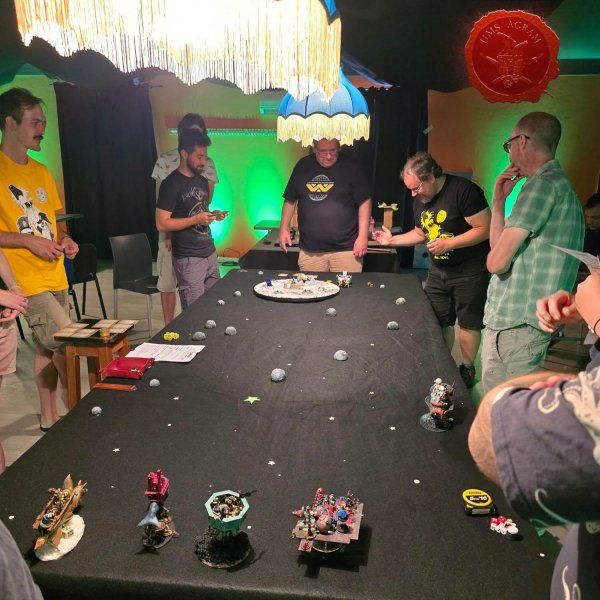



















Latest battle-reports
- Kill Team - Blooded vs. Vespid Stingwings 28th February 2025, GW - Warhammer 40.000, and Antoni Pastuović (Imperial Guard)
- 22nd April 2022, GW - Warhammer 40.000, Borna Pleše (Space Marines) and Kristijan Kliska (Tau Empire)
- 17th November 2021, GW - Warhammer 40.000, and Nino Marasović (Space Marines)