Articles
We attended: Days of Technical Culture 2026
Marko Paunović, 23th September 2026

On Friday and Saturday, 18 and 19 Sept 2026, we participated in the Technical Culture Days at the Technical Museum. At our stand, visitors could discover the world of miniatures, and we were especially delighted by the interest shown by children who picked up a paintbrush for the first time.

Kruno and the team did a fantastic job guiding them through the initial steps of coloring. There was a mix of concentration, joy, and the occasional serious question about which color best suited the little hero. Interest was so high that the workspace around our stand quickly became cramped. For next year, we would love to see more space for workshops so that everyone can sit down comfortably and try their hand at painting.


I have participated in the Technical Culture Days for years, ever since the event was held in Dubrava. For me, the Nikola Tesla Technical Museum represents a major step forward: the venue lends a special atmosphere to the event, ...
Read more about "We attended: Days of Technical Culture 2026"Agram Group Build #7 – Amon Hen, pt.1
Marko Paunović, 14th September 2026Agram Group Build is back. For this seventh installment, the team decided to create a gaming board/diorama for Amon Hen. To that end, we fulfilled a childhood dream and acquired the original Forge World Amon Hen terrain (released around 2000) along with the accompanying set of miniatures. This series of articles will document the entire project—from crafting the terrain to assembling and painting the miniatures.
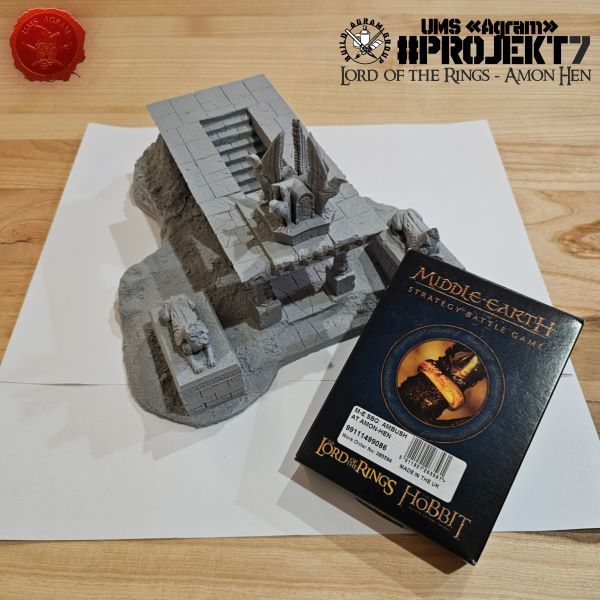
The idea from the start was to create a diorama of the famous scene from *The Lord of the Rings* where Boromir falls in battle and the Uruk-hai abduct two—fortunately, the wrong—Hobbits. Ideally, we envisioned everything fitting onto a 40 x 40 cm board. So, the first step was to verify this; we used two sheets of A3 paper to create a square of roughly the desired size.
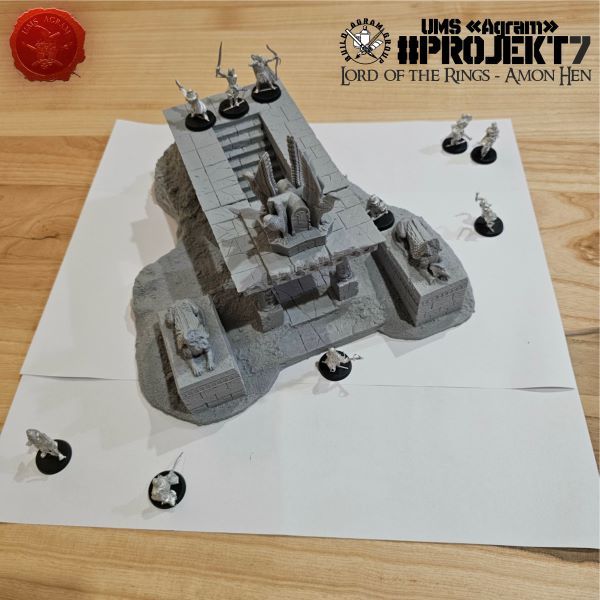
Figures and terrain fit perfectly for the board of that size. However, this should also be a diorama, so we checked how everything works together with vegetation. Fortunately, before t...
Read more about "Agram Group Build #7 – Amon Hen, pt.1"We attended: H.R.E.N. 28 - 2026., Medvode, Slovenia
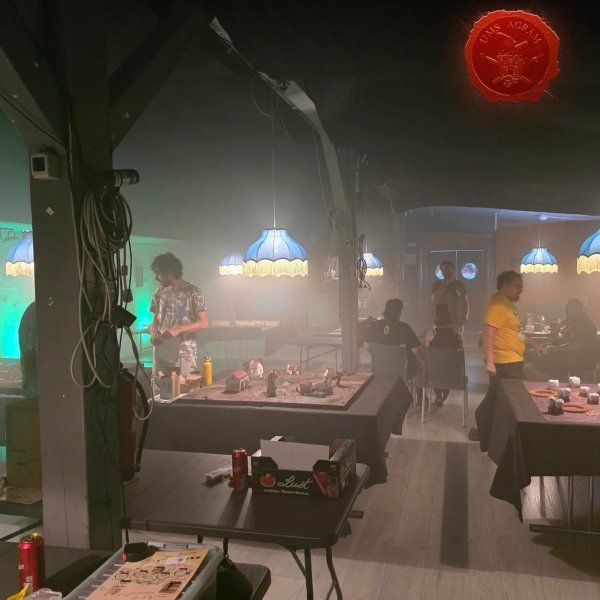
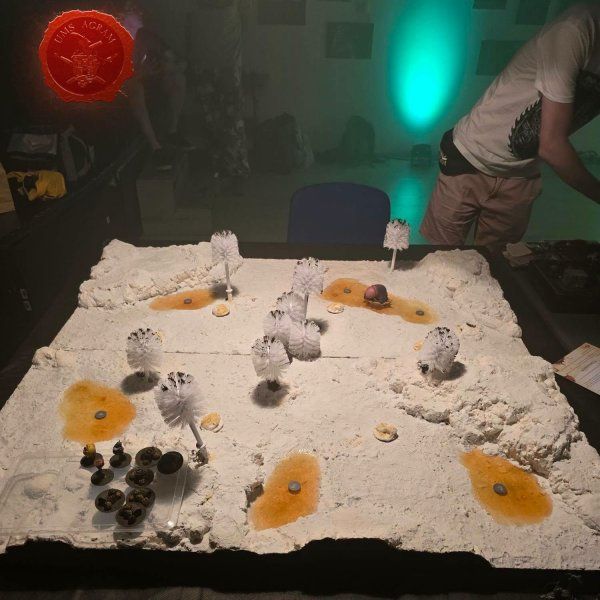
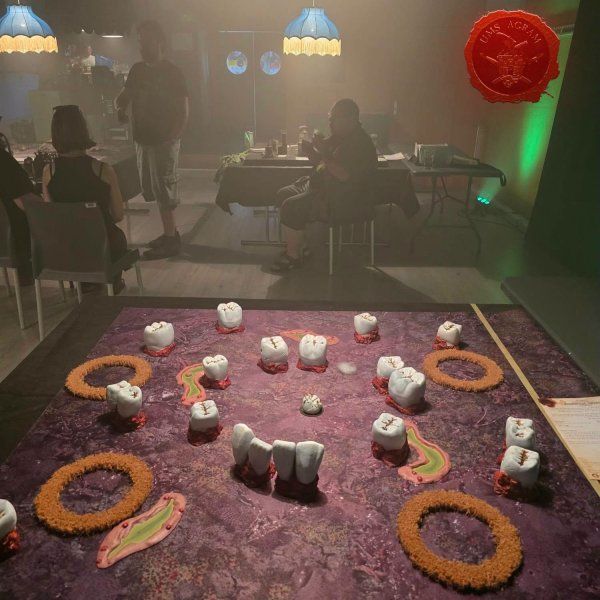
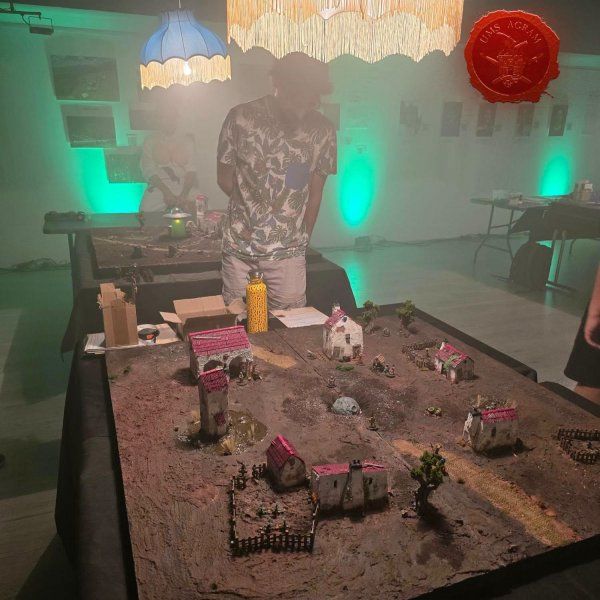
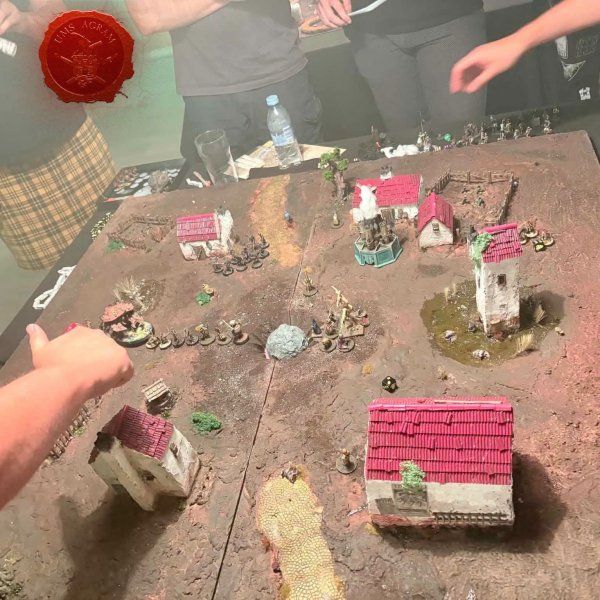
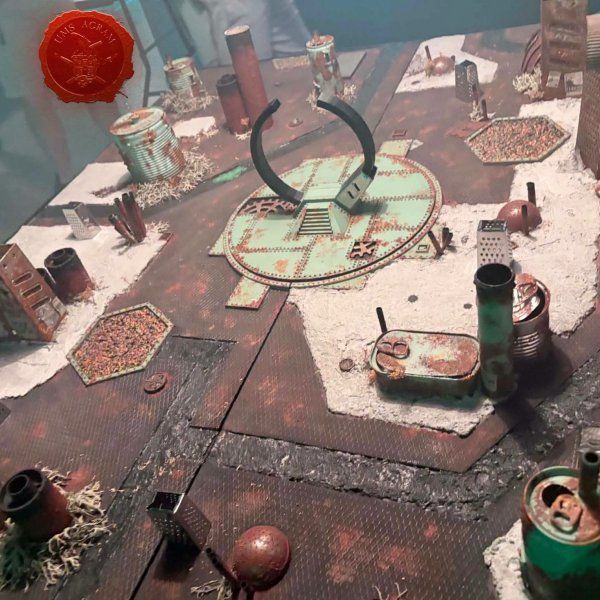
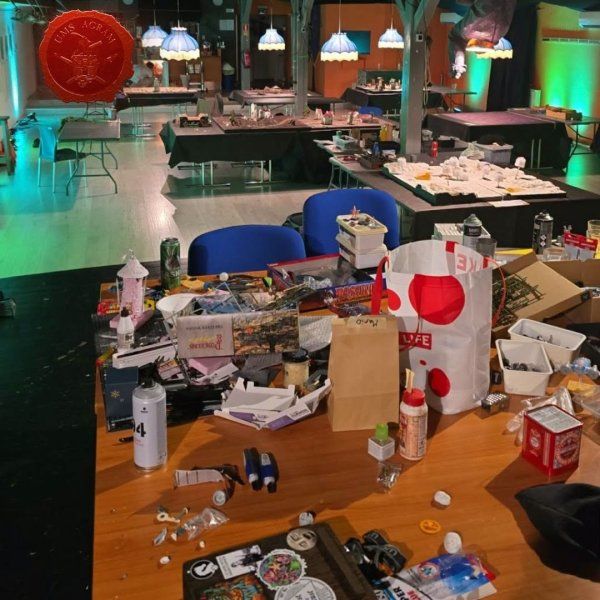
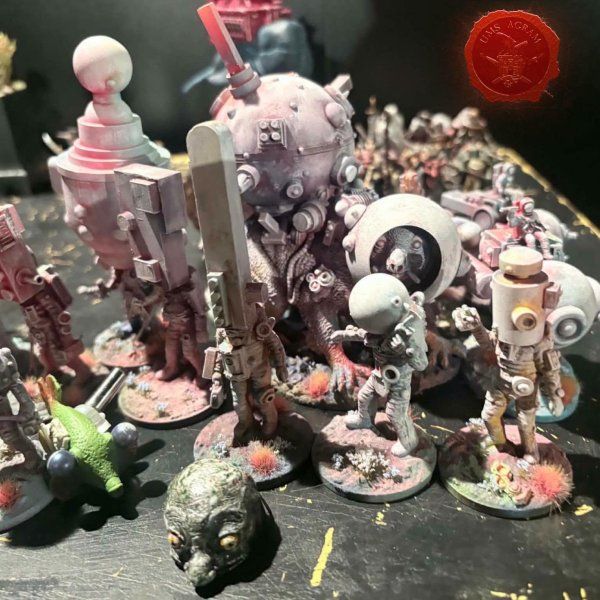
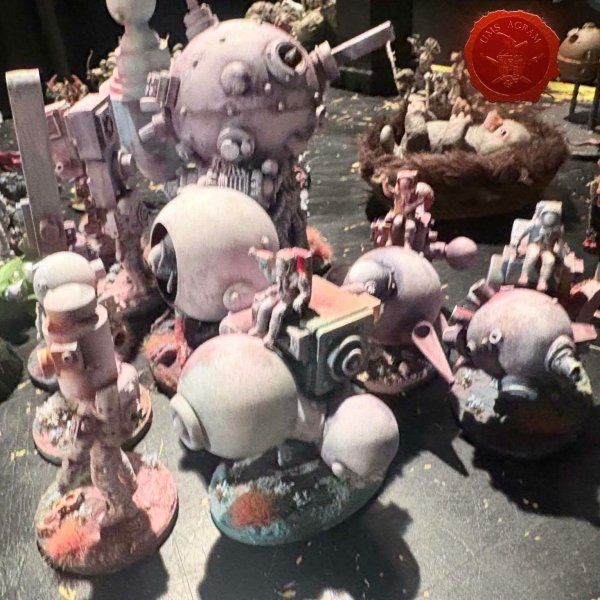
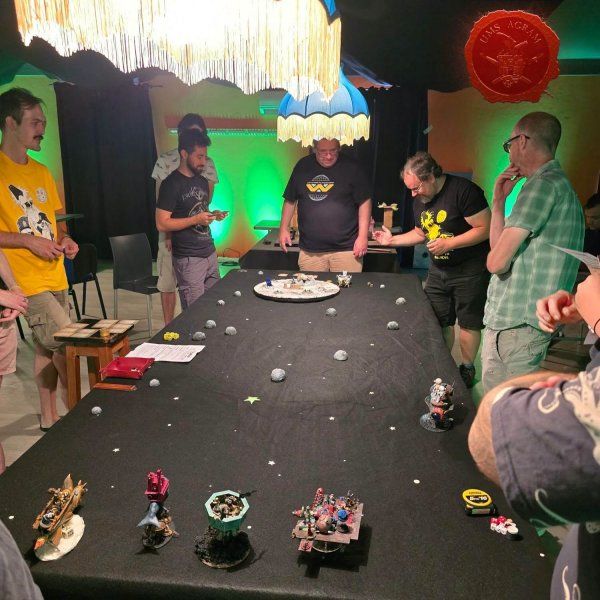
Mario Grgurev, 7th September 2026Another success for the Hren organizers! Of the two-day event, the first day was dedicated to the Turnip28 game, and the second to an original game designed by the hosts. Like last year, the tables and courts exceeded the expectations of the players, the scenarios were imaginative, and I enjoyed the interaction between the tables during the game. For example, my first game involved rubbing horseradish roots on the figures during the game, including other tables in the hall. The next day, we played as a fun cooperative game in pairs, in which each pair of players had their own kit-bashani spaceship (which we made before or during the event) with which we had to pick up Tod (a character from last year) and return him to Earth. There was no shortage of chaos. The hosts from Amulet tried to make us comfortable and not hungry or thirsty during the entire event, and I can only say words of praise for their effort and engagement!
Building a display base for Agramers v.2
Marko Paunović, 15th July 2026In this article, I will briefly describe the process of creating a scene base for Agramer v.2, from idea to creation, painting, adding vegetation, and finally casting the slices.
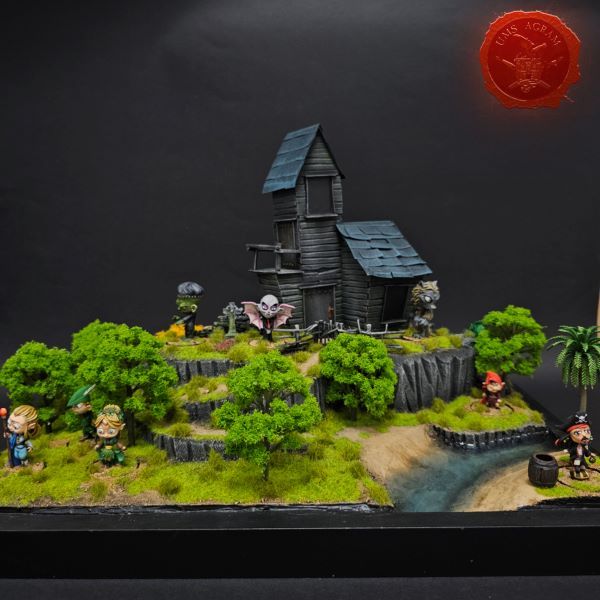
The first step in the creation is the idea. For this project, it wasn't too difficult for me, because I participated in (creating) how the figures themselves should look. Therefore, I already had them arranged in some groups in my head. Orc, troll and goblin in one; vampire, Frankenstein's monster and werewolf in another; desert Zorro and sheriff; Highland/Scottish Braveheart, dwarf and bard; and forest Robin Hood, Elf Mage and Elf Enchantress. In the end, there remains the gnome and Jack Sparrow who goes to the island. Inside the purchased frame, I placed the figures, and drew the outlines of the terrain.
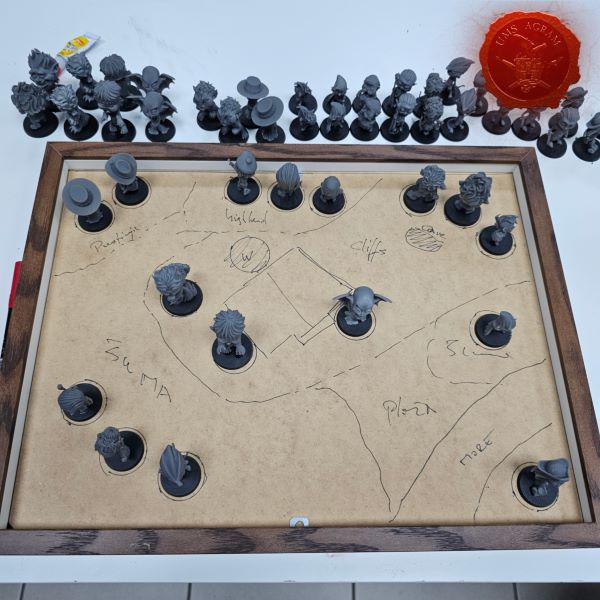
After that, I added volume to the base using 2 cm and 5 cm thick HD Styrofoam, slowly shaping the final look of the terrain. I also tried out the look with the figures in each ite...
Read more about "Building a display base for Agramers v.2"Pigmentation principles: Binders and solvents - what holds the paint in place and what allows it to flow
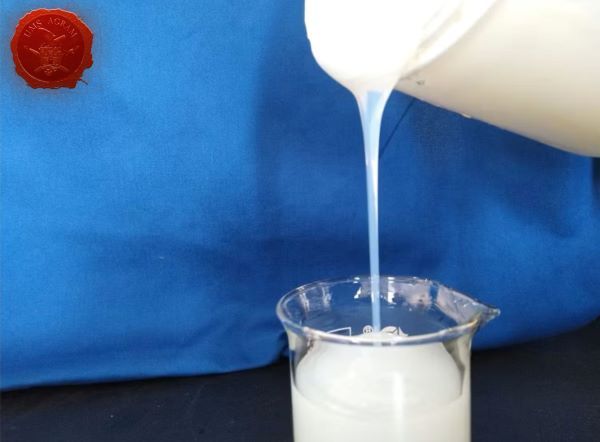
Dunja Singer, 13th July 2026So far in this series, we've written about the visible and tangible properties of paint — why paint has a certain shade, why it covers or doesn't cover, why it flows more easily or more slowly. This article is about what lies beneath it all: binders and solvents, the components that determine what remains on the surface when everything else evaporates.
1. What is a binder and what is its role
A binder is a component of paint that holds pigment and filler particles together and ensures their adhesion to the substrate. When the paint dries or sets, the binder forms a continuous film that encapsulates the pigment and protects it from mechanical and chemical influences. The binder determines most of the application properties of the finished paint: film flexibility, hardness, gloss, chemical resistance, adhesion and durability. Two coatings with the same pigment but different binders can behave completely differently — one may be flexible and waterproof, the other brit...
Read more about "Pigmentation principles: Binders and solvents - what holds the paint in place and what allows it to flow "Pigmentation principles: Density, viscosity and opacity - three different things we call the same name
Dunja Singer, 13th July 2026In discussions about paints, coatings and various masses, one often hears: this paint is thick; — and this can mean three completely different properties. This text explains what each of them actually means, why it is important to distinguish between them and how this difference affects practical decisions such as thinning the paint.
1. Density — how much material is in a given volume
Density is a physical property that describes the mass of a material per unit volume. It is measured in grams per milliliter (g/ml) or kilograms per liter (kg/l). Water has a density of about 1 g/ml; metals are much denser, oils somewhat less. Density is a property of a material — it does not change when you stir it, heat it, or cool it. A paint with a density of 1.4 g/ml remains that density whether you stir it with a spoon or let it sit. In the context of paints and coatings, density depends on the composition of the formulation — how much pigment, filler, binder, and solvent is in ...
Read more about "Pigmentation principles: Density, viscosity and opacity - three different things we call the same name"Latest battle-reports
- Kill Team - Blooded vs. Vespid Stingwings 28th February 2025, GW - Warhammer 40.000, and Antoni Pastuović (Imperial Guard)
- 22nd April 2022, GW - Warhammer 40.000, Borna Pleše (Space Marines) and Kristijan Kliska (Tau Empire)
- 17th November 2021, GW - Warhammer 40.000, and Nino Marasović (Space Marines)