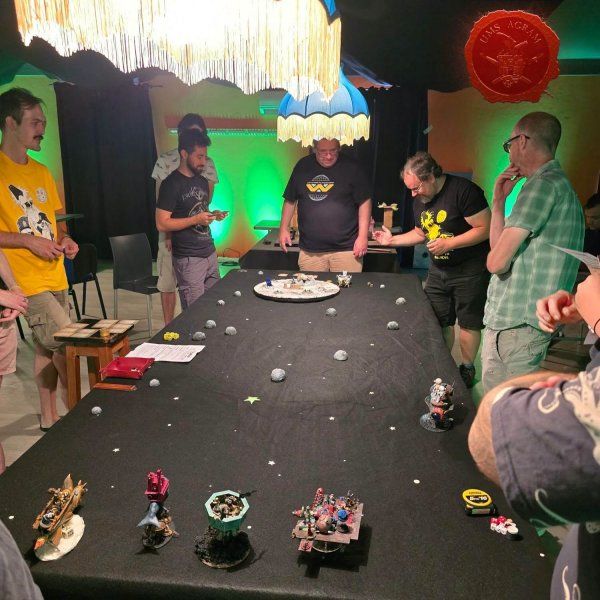
Making a plexiglass protection box
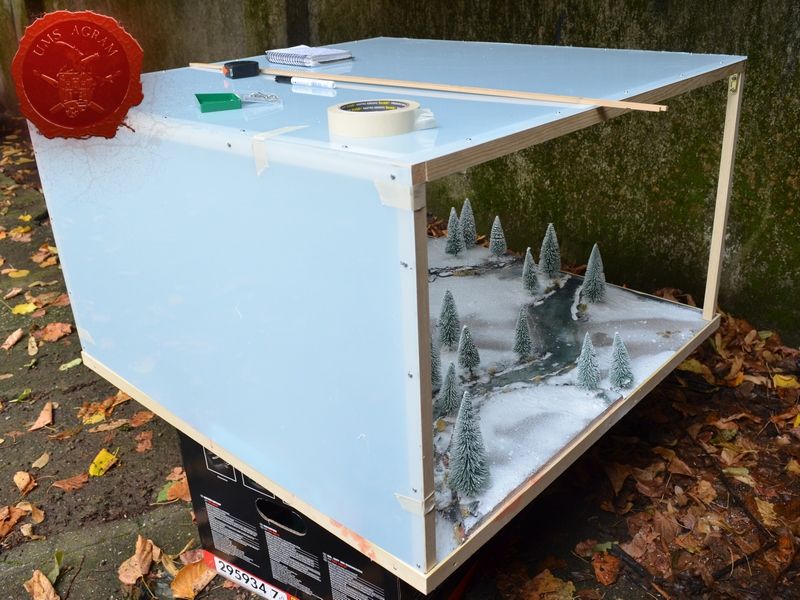
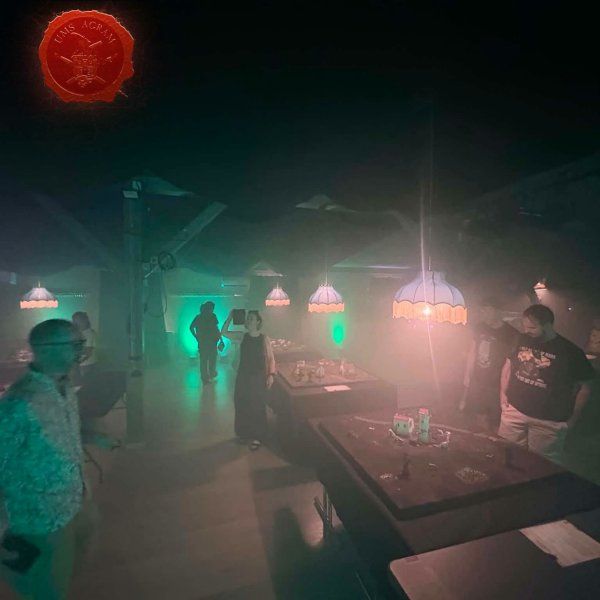
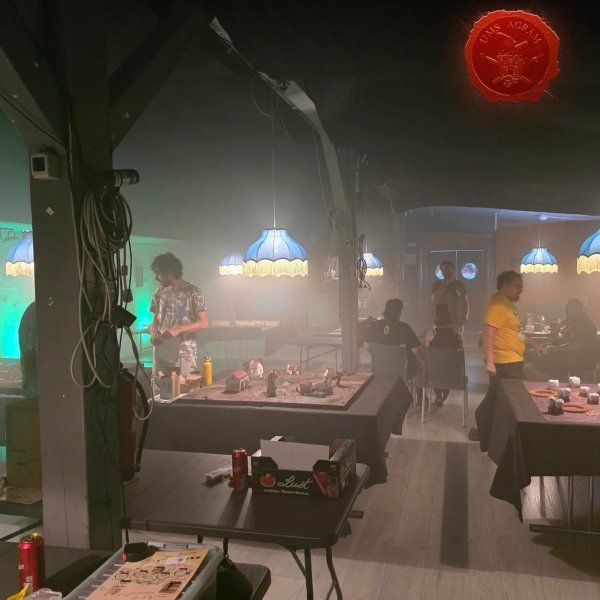
Since the article about the Tabletop World terrain table done for Frostgrave was published, I received several questions on how we protect such a gaming bord from dust and dirt when not in use, so I decided to make an article where I describe the process of making a plexiglass protection box for an entire board (in this case the Frostgrave bord) so it could be left on display in the shared spaces of my gaming club UMS „Agram“.
Planning
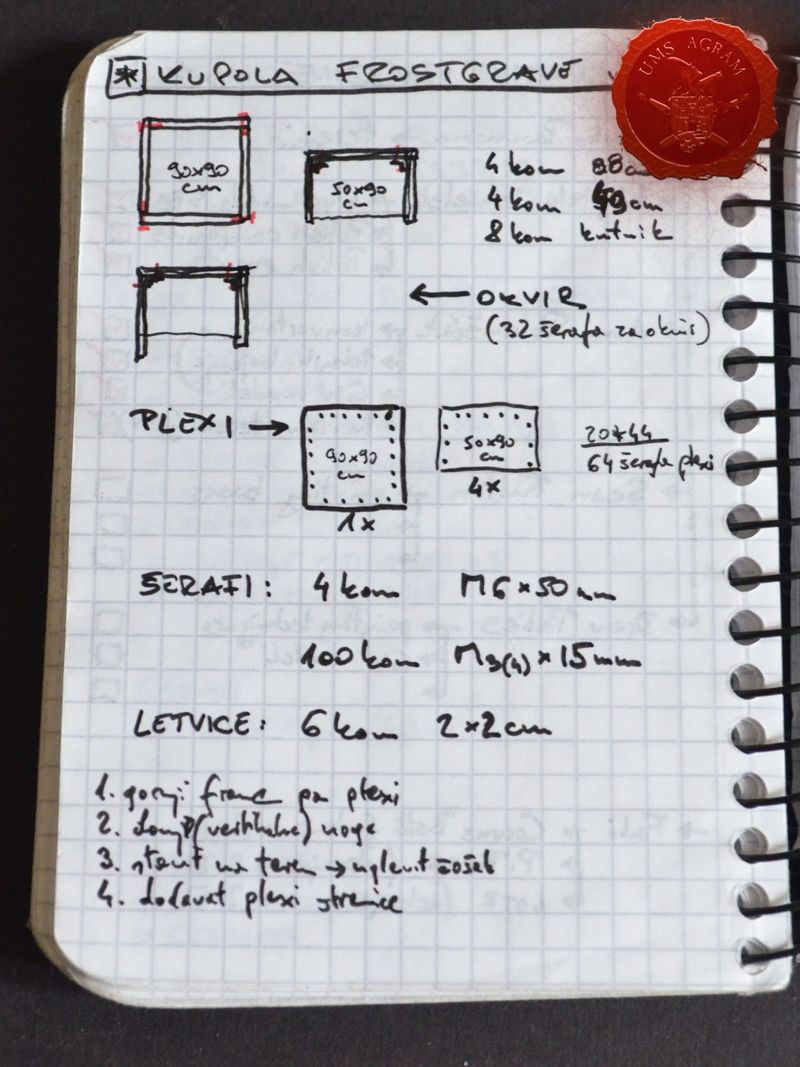
The table was 90 x 90 cm with a small wooden protection frame around it made primarily to be able to fit the protection box. The height of the tallest building (TTW Town Gate) was around 45cm. All this meant my protection box would need to be 90 x 90 x 50 cm in size. A quick sketch proved that I needed the following:
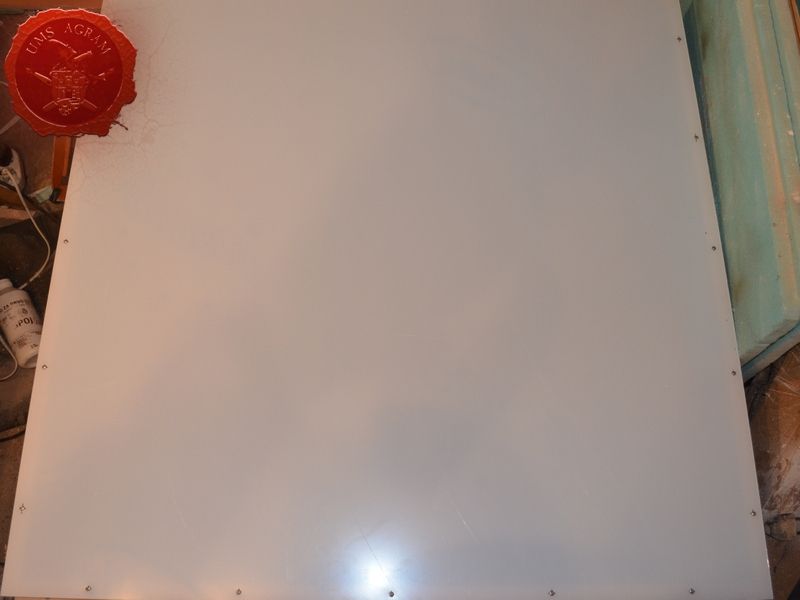
- 1 piece 90 x 90 cm of 5mm thick plexiglass
- 4 pieces 50 x 90 cm of 5mm thick plexiglass
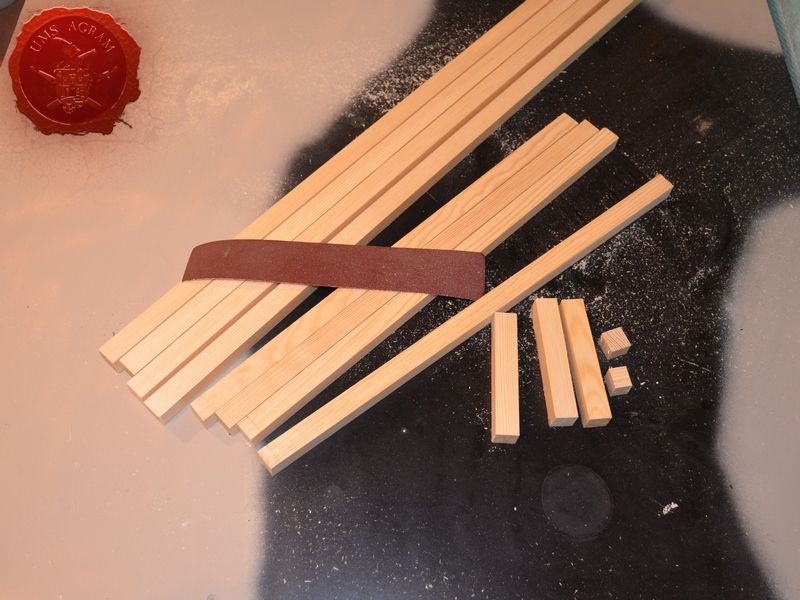
- 6 pieces of 2 x 2 x 100 cm wooden slat (linden) for 4 x 90 cm for the upper frame and 4 x 50 cm for the legs
- 4 larger metal brackets
- 4 smaller metal brackets
- 4 pieces M5x60 mm screws (for the upper frame)
- roughly 100 M3x16 mm screws (for the legs and the plexiglass)
- screwdriver (or bits for the electric drill)
- electric drill (small and large)
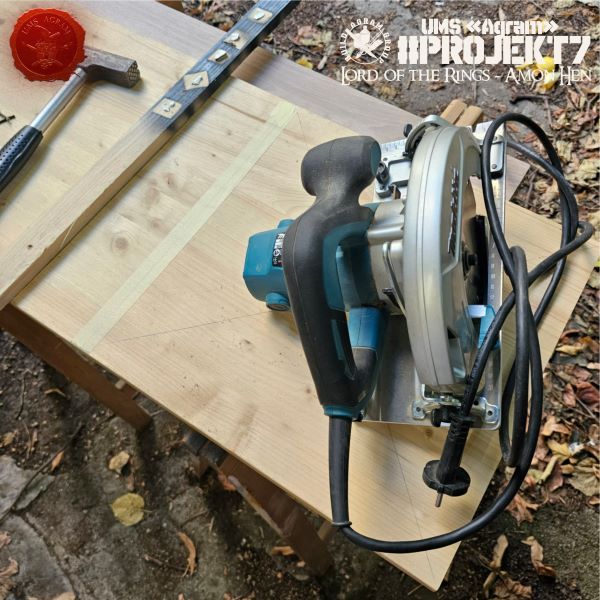
- circular saw
- sanding paper
- meter
- permanent marker
- masking tape
Building
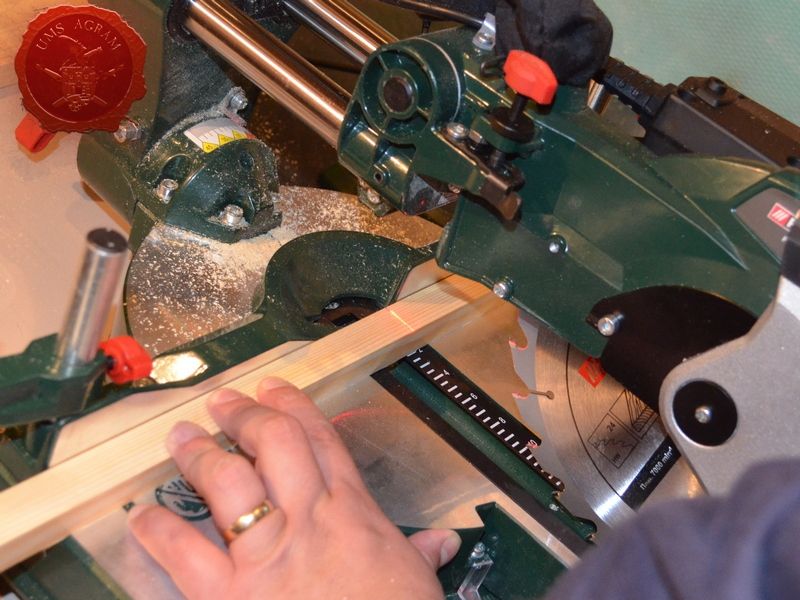
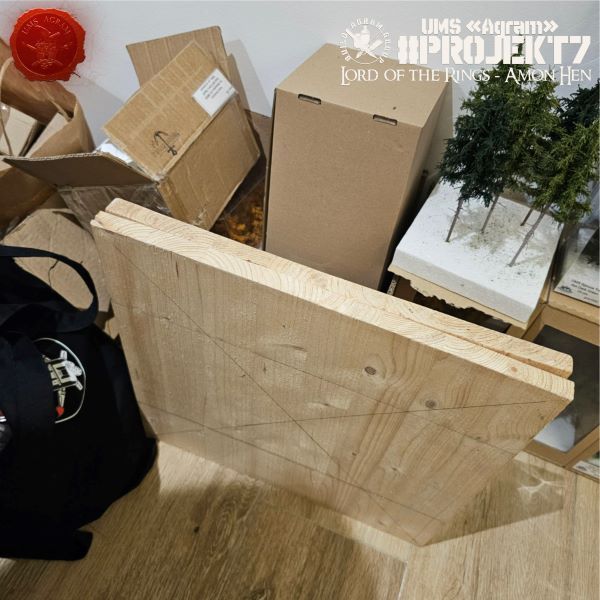
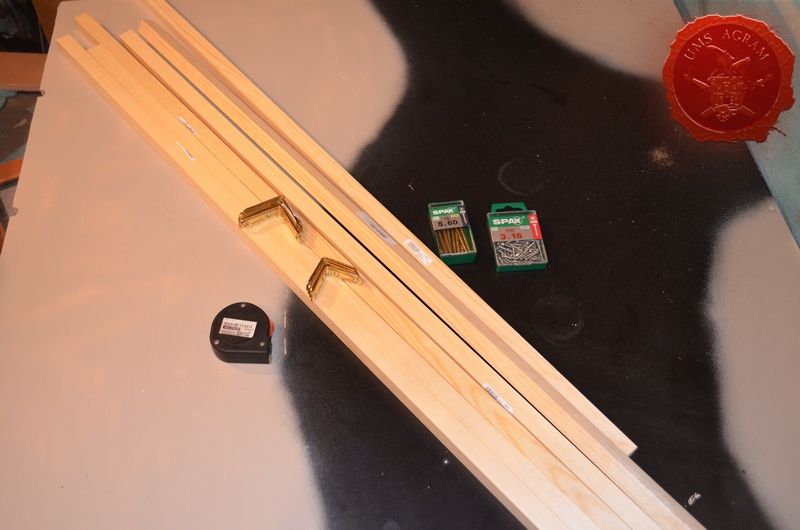
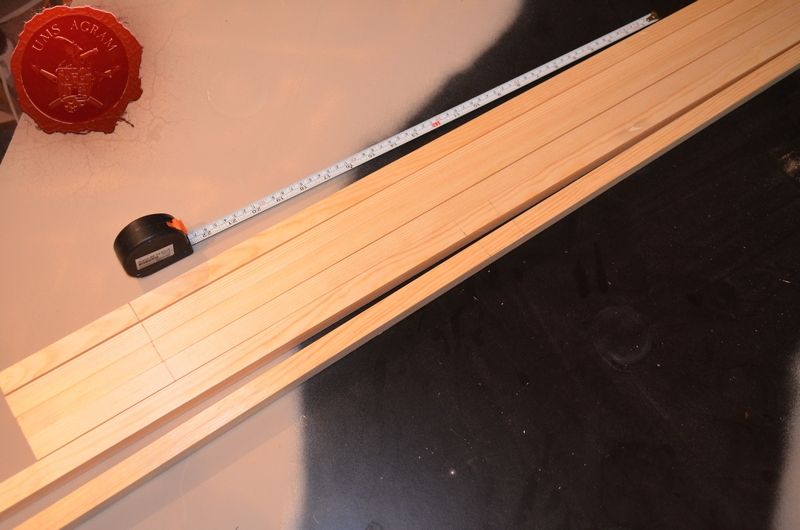
The building process began with carefully marking each slat where I needed to cut it. Using a large table mounted circular saw I cut the pieces to size. Fortunately, the saw I used had a laser pointer which made cutting the slats to exact size much easier. When the cutting was done, I sanded the cut areas with some sanding paper.
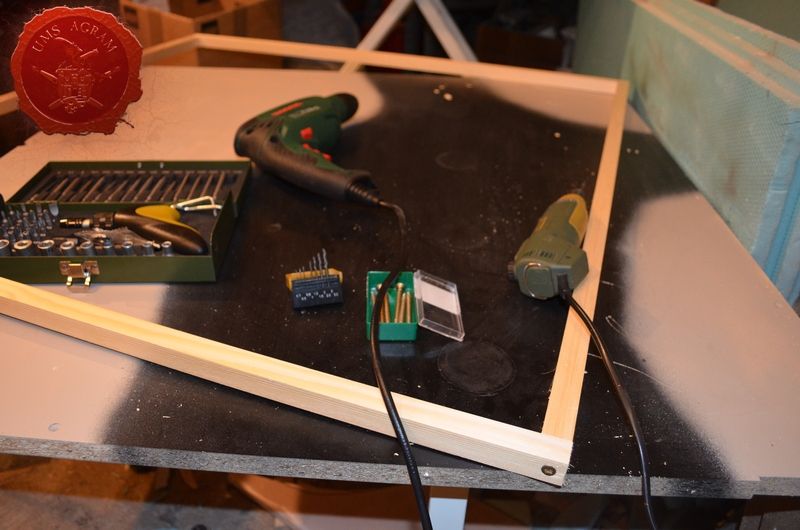
Next up I assembled the four 90cm long slats into a square wooden frame. Once done, I used my Proxxon electric drill to drill the holes for the M5x60 screws. I used a 3mm drill bit. After drilling, I fixed the frame with the screws. The frame still wasn't perfectly aligned. To align it, I decided I wouldn't use any extra bits. I would simply use the plexiglass (which was cut to exact specs professionally in the store). Using a 1,5mm drill bit on my Proxxon, I drilled the holes in the plexiglass and the wooden frame. Once I was done drilling the holes on each plank of the frame, I immediately fixed it with five M3x16 screws a side. Note: the plexiglass comes with a protective foil. Do not remove it until all the work is done to prevent accidental damage during the build.
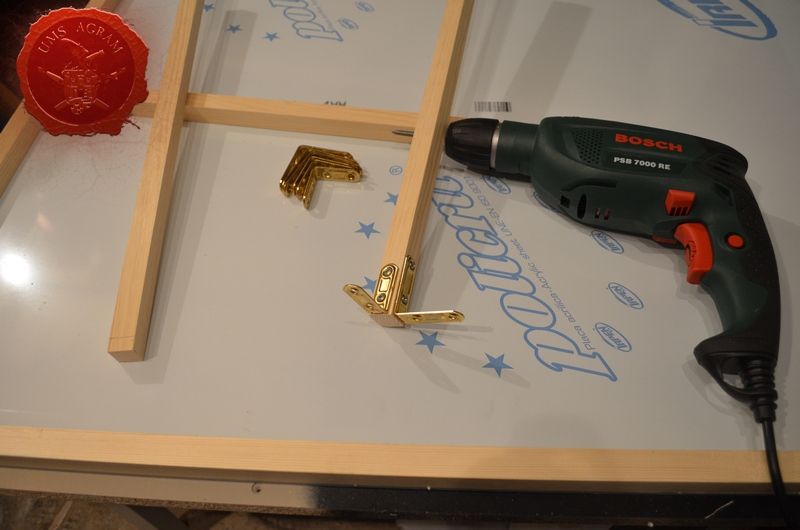
The upper part of the box was done. Next up were the legs. Using the M3x16mm screws I fixed one smaller and one larger bracket to each leg. Once all the legs were done, I fixed them to the upper part of the box. Once the frame was fully assembled, you can notice that due to the relatively small size of (even the larger) brackets, the legs are not perpendicular to the upper part of the box. In fact they were quite wobbly at this point. This isn't a worry as I would again use the plexiglass sides to fix the legs in place. However I decided to proceed with the assembly with the box installed on the Frostgrave board. This way I could place the legs perfectly in the corners of the board and then using the M3x16 screws fix the legs in place with plexiglass. This way, I would use the wooden planks for the structural strength of the entire box while the plexiglass sides would provide the shape and stability.
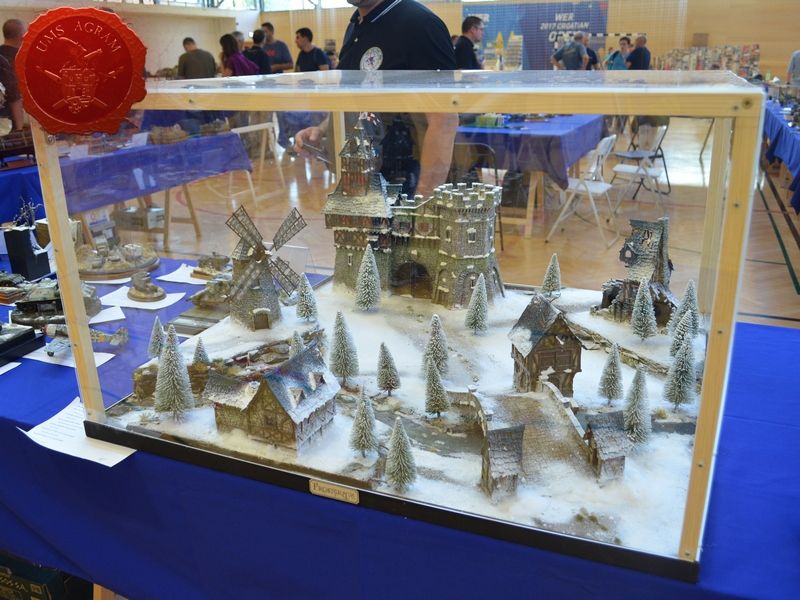
Finished product
Once the box was built, I carefully removed the protective foil from the plexiglass. In fact, as this was done just before a modelling show, I removed the foil at the show to prevent any possible damage to the case before it arrived at the show.
Latest articles
- Back to Basics Workshops in Galerija VN, a part of Libraries of Zagreb Krunoslav Belinić, 4th December 2025
- We attended: Monte San Savino 2025 Marko Paunović, 24th November 2025
-
Science behind Acrylic Paints
- Binders (eng. resin) – form a film – in our case probably pure acrylates, I suspect they are styrene acrylates.
- Fillers – in addition to adding volume to the paint, they also affect the viscosity, coverage and appearance of the dry film
- Pigments – the main division is into organic pigments and inorganic pigments. Inorganic ones are more covering but have less vivid shades, while organic ones are often quite poorly covering (yellow for example) but their shades are vivid and bright
Additives:
- Anti-foam
- Rheological modifiers – affect the behavior of wet paint on the substrate (e.g. spillage) and the behavior of the paint when a force is applied to it (brush, roller, spray, airbrush). Rheological modifiers also include thickeners that affect the viscosity of the paint.
- Dispersants – envelop pigment and filler particles and prevent their agglomeration during standing. Good dispersion of pigment and filler affects the coverage and uniform appearance of the dry film. There are a bunch more but I won't go into too much detail
- Solvent – in this case water.
Contrast paints and speed paints – high pigment content, but not so much that it causes high coverage. They are formulated to spread, not to stay where you put them. The result of spreading is that the paint collects in the recesses, where a thicker film of paint remains than on the protruding parts of the miniature. Where the film of paint is thicker (the recesses), the shade of the contrast paint is more pronounced, unlike on the protruding parts where the film is thinner, which is why the shade is then influenced by the color of the substrate.
Composition:
- Binders
- Pigments
- Additives – all listed above + surfactants that reduce the surface tension of the wet paint film, which is why it flows
- solvent
- I would say they do not contain fillers, or contain very, very little of them
Washes – similar in formulation and behavior to contrast agents, only they have a much lower proportion of pigments, certainly no fillers, a higher proportion of surfactants, lower viscosity, and probably less binders.
If we want to greatly dilute acrylic paint or contrast, it is better to use a product intended for this purpose from the manufacturer of that paint rather than water, because it contains all the necessary amount of binders and additives for that paint to retain its properties.
" ["content_hrv"]=> string(4306) "U ovom članku, naša Dunja nam otkriva znanost iza akrilnih boja.
Akrilne boje – visoki udio pigmenta i dobra pokrivnost. Ako su dobro formulirane ostaju tamo gdje ih naneseš, ne ostavljaju „brush marks“ i suše se dovoljno sporo da stigneš napravit što želiš na minijaturi a opet dovoljno brzo.
Sastav:
- Veziva (eng. resin) – formiraju film – u našem slučaju vjerojatno čisti akrilati, sumnjam da su stiren akrilati.
- Punila – osim što dodaju volumen boji utječu i na viskoznost, pokrivnost i izgled suhog filma
- Pigmenti – glavna podjela je na organske pigmente i anorganske pigmente. Anorganski su više pokrivni ali manje živih nijansi, dok su organski često dosta loše pokrivni (žuti npr) ali zato su im nijanse žive i jarke
Aditivi:
- Protiv pjene
- Reološki modifikatori – utječu na ponašanje mokre boje na podlozi (npr razlijevanje) i na ponašanje boje dok na nju djeluje sila (kist, valjak, sprej, airbrush). Pod reološke modifikatore spadaju i ugušćivači koji utječu na viskozitet boje.
- Dispergatori – obavijaju čestice pigmenata i punila i sprječavaju aglomeraciju istih stajanjem. Dobra dispergiranost pigmenta i punila utječe na pokrivnost i ujednačen izgled suhog filma.
- Ima ih još hrpa ali neću toliko u detalje
- Otapalo – u ovom slučaju voda.
Kontrastice i speed paints – visoki udio pigmenta, ali ne toliki da uzrokuje visoku pokrivnost. Formulirane su da se razlijevaju, a ne da ostaju tamo gdje ih staviš. Posljedica razlijevanja je skupljanje boje u udubine gdje onda ostane deblji film boje nego na isturenim dijelovima minijature. Tamo gdje je film boje deblji (udubine) nijansa kontrastice izraženija, za razliku od isturenih dijelova na kojima je film tanji zbog čega na nijansu onda utječe boja podloge.
Sastav:
- Veziva
- Pigmenti
- Aditivi – svi nabrojani gore +
- surfakanti koji smanjuju površinsku napetost mokrog filma boje zbog čega i dolazi do razlijevanja
- otapalo
- rekla bih da ne sadrže punila, ili ih sadrže vrlo vrlo malo
Washevi – po principu formuliranja i ponašanju slični kontrasticama, samo imaju puno manji udio pigmenata, sigurno ne sadrže punila, veći udio surfakanata, manji viskozitet i vjerojatno manje veziva.
Ako želimo jako razrijediti akrilnu boju ili kontrasticu bolje je koristiti za to predviđen proizvod od proizvođača te boje nego vodu, jer sadrži svu potrebnu količinu veziva i aditiva kako bi ta boja zadržala svoja svojstva.
" ["created"]=> string(19) "2025-11-20 13:03:37" ["modified"]=> string(19) "2025-11-20 13:03:37" } ["Member"]=> array(10) { ["id"]=> string(2) "64" ["group_id"]=> string(1) "1" ["first_name"]=> string(9) "Krunoslav" ["last_name"]=> string(8) "Belinić" ["first_name_mask"]=> string(9) "krunoslav" ["last_name_mask"]=> string(7) "belinic" ["username"]=> string(5) "Kruno" ["password"]=> string(40) "eb3fda45fbec0258e90d809803b10491c548b22f" ["born"]=> string(19) "2015-01-18 09:19:00" ["created"]=> string(19) "2015-01-18 09:20:39" } } Krunoslav Belinić, 20th November 2025 - We attended: ModelMania 2025 Marko Paunović, 5th November 2025
- Necropolis Board part 1 Antoni Pastuović, 5th November 2025
Latest battle-reports
- Kill Team - Blooded vs. Vespid Stingwings 28th February 2025, GW - Warhammer 40.000, and Antoni Pastuović (Imperial Guard)
- 22nd April 2022, GW - Warhammer 40.000, Borna Pleše (Space Marines) and Kristijan Kliska (Tau Empire)
- 17th November 2021, GW - Warhammer 40.000, and Nino Marasović (Space Marines)